Raffles is now 7 years old and ready to start developing half pass, walk pirouettes and flying changes! Follow our real-life training and learn how to produce your horse correctly, step-by-step. This program will ‘future-proof’ you and your horse, so you are ready to compete successfully at Medium level and beyond!
Medium / Advanced Med
7yo Raffles is ready to start developing half pass, walk pirouettes and flying changes!
Complete all 4 seasons to take your training to the next level!
Complete all 4 seasons to take your training to the next level!
Spring
Summer
Autumn
Winter
Spring Season
Our theme this season is 'Impulsion & Straightness' - you can't have one without the other! Follow each lesson and learn how to unlock your horse's power.
Our quick reference cards for each lesson will keep you and your horse on track!
Spring: Lesson 1
True Straightness
This lesson is the key to unlocking your horse's power!
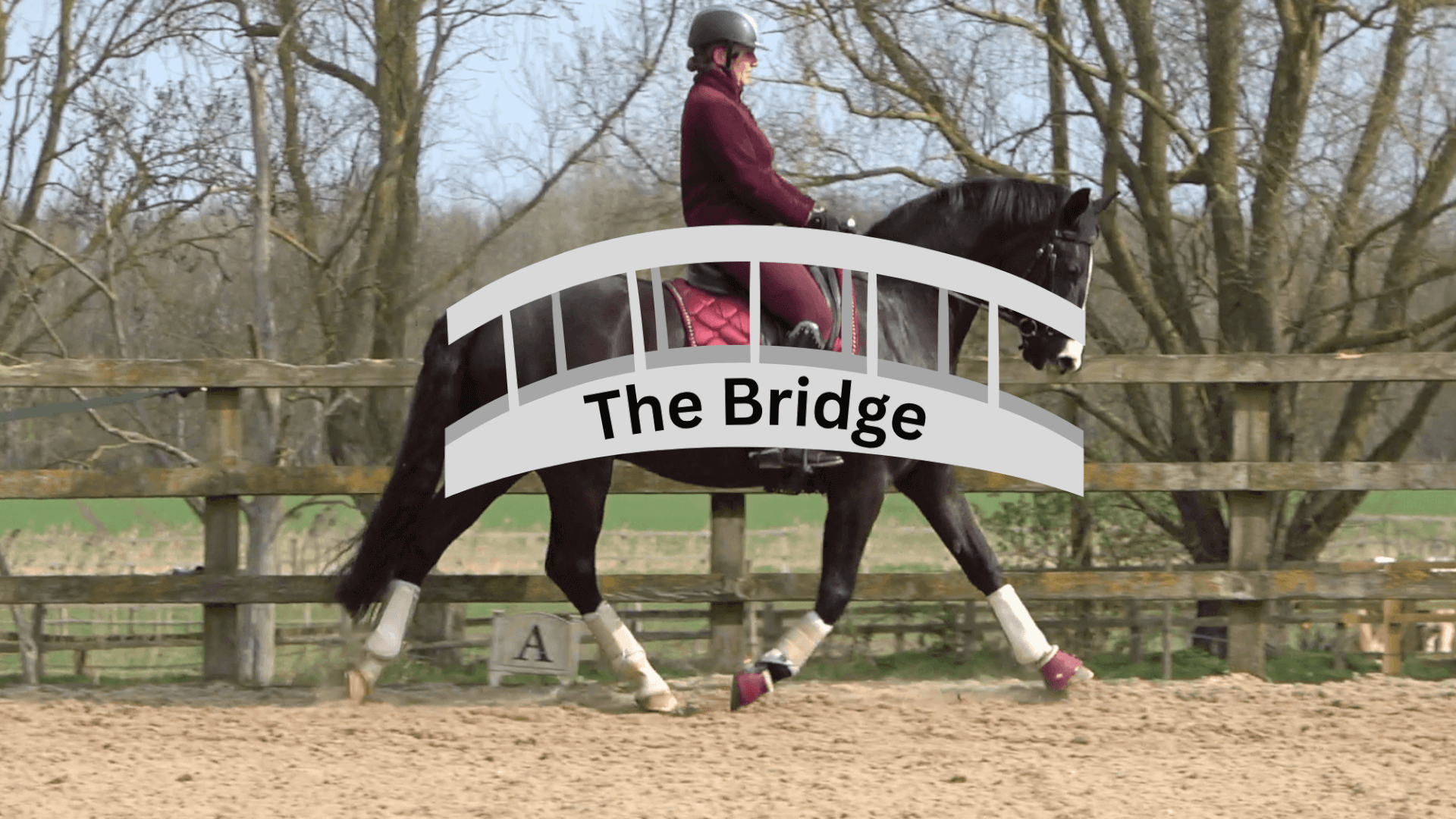
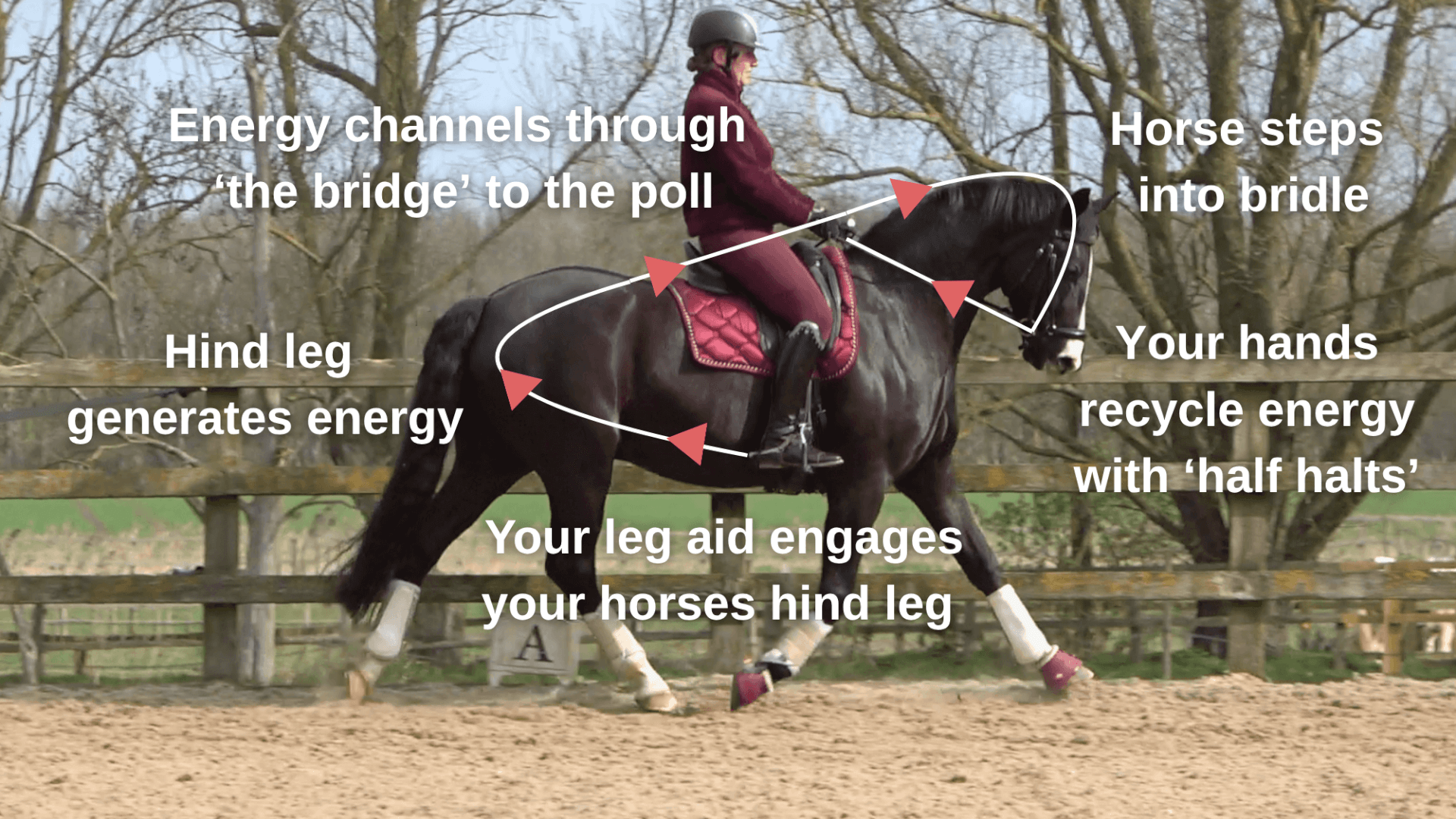
In this season we focus on building 'the bridge' of muscle which channels the power from your horse's hindquarters, through the body, and into your hands. Some riders (even at top level) don’t really understand how "the bridge" works, but don’t worry! In this season you will learn a series of key lessons which stack up to build impulsion.
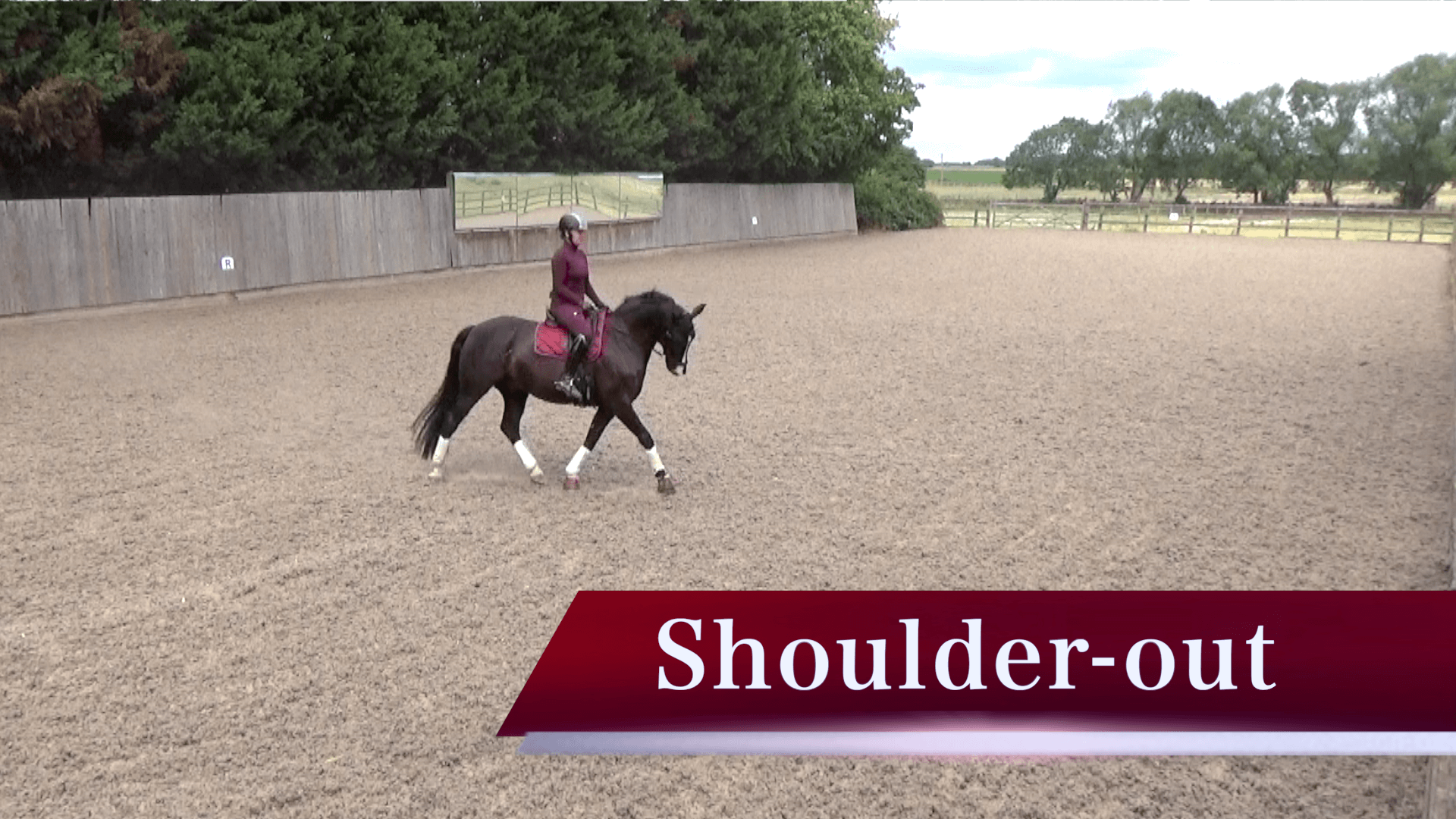
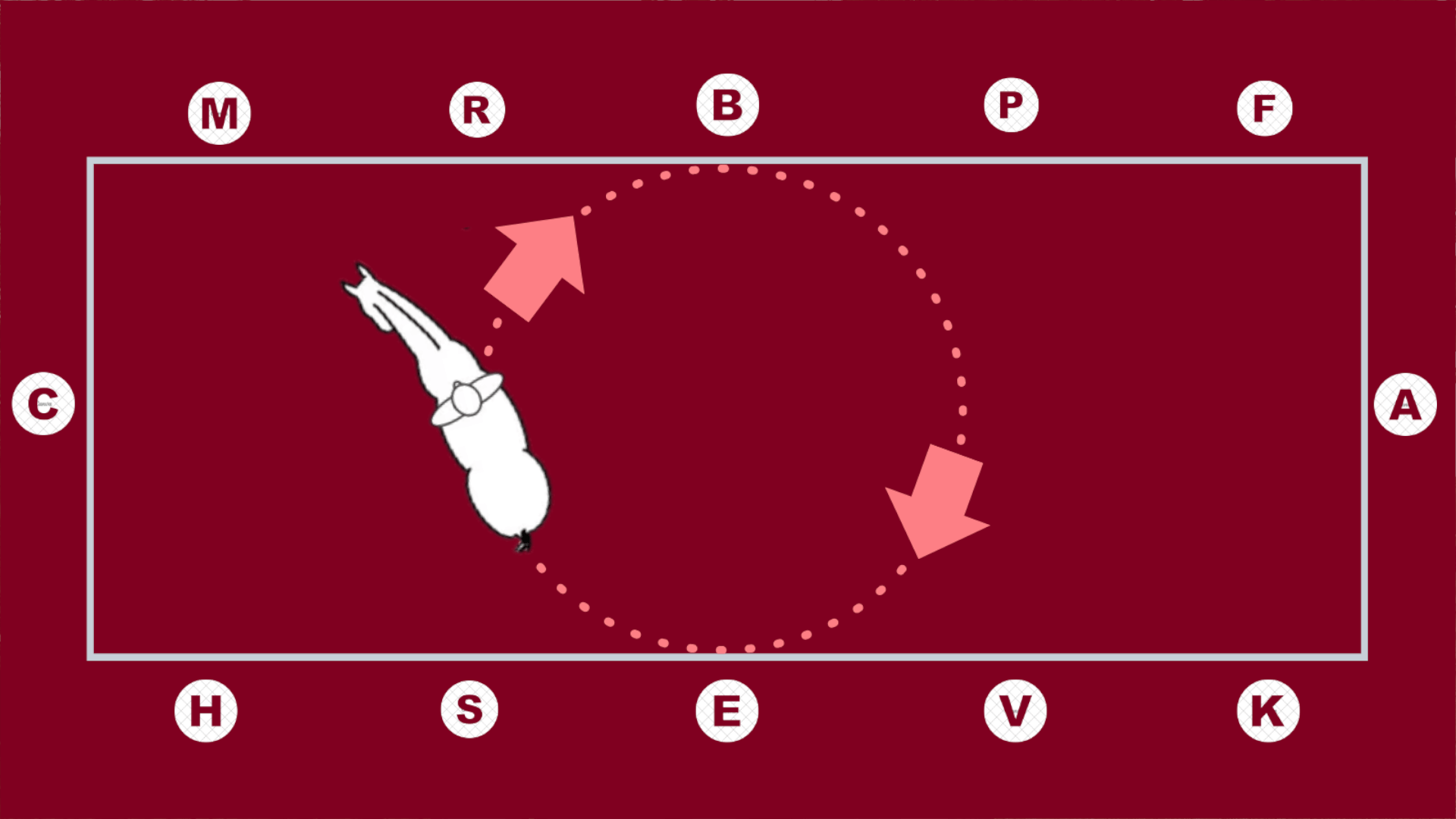
We start with an exercise positioning your horses 'shoulders-out' to teach your horse to work evenly into both reins, so that both sides of the horse are evenly developed, they are genuinely working 'through' to the contact and we don’t have any blockages or a weak links in "the bridge".
By the end of this season your horse will becomes truly straight - and only then can 'the bridge' allow the energy to transmit through the whole body giving you access to amazing power under saddle. This incredible feeling really is the 'Holy Grail' we are all searching for as riders. Enjoy!
Spring: Lesson 2
Creating an even contact
The next step to build 'the bridge' is developing straightness in canter
As we learned in lesson 1, the first step to build our bridge is to have your horse evenly supple through the body so that they can step evenly into your hands. We know that by nature horses often sided or asymmetrical, so they feel really good working on one rein but less fluent on the other.
Remember your hands tell you what is happening behind the horse, so if you have an even contact then you know that both hind legs are pushing evenly. If you skip this part and don’t teach your horse to work evenly into both reins there will be problems ahead when we then start to ask for more push in the future.
This lesson will teach you how to develop your horse correctly, so they learn to stay nice and even your hands. As 'the bridge' becomes stronger your horse will become lighter, which then means they can be more proficient in the movements and the paces will become beautifully expressive.
Spring: Lesson 3
Forward Connection
Ride forward into downward transitions to create impulsion - don't kill it!
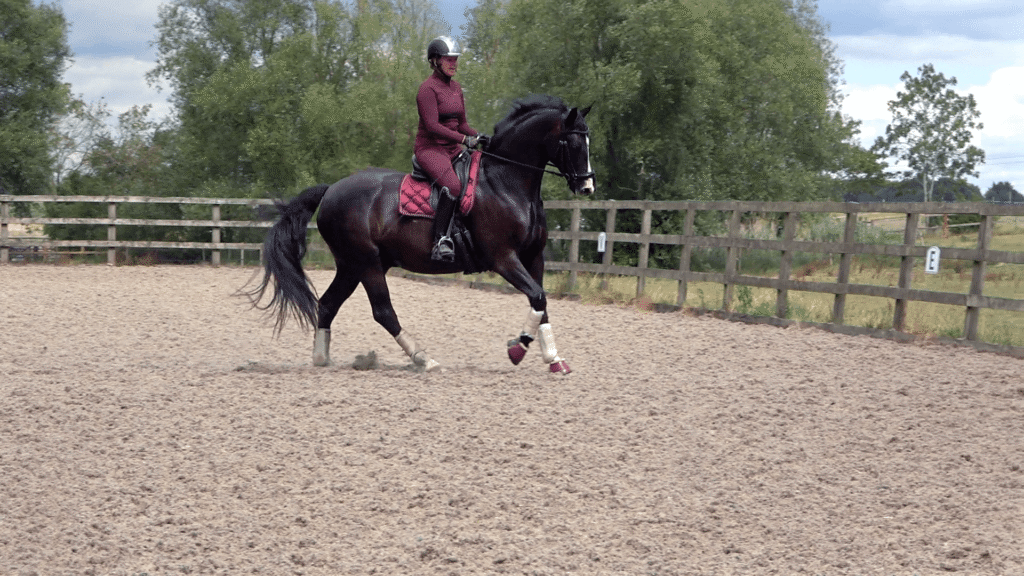
By now you should now understand how energy travels through your horses body. In this lesson we are going to continue building our 'bridge' by working on ‘forward downward transitions’, aiming to channel the energy forward with your horse stepping evenly into your hands.
Canter to trot transitions which are trickier than they sound. I often see riders making the mistake of 'killing' the canter and 'falling' into trot - so then the horse disengages and they fall down in front. Remember your hands tell you what is happening behind you, so if at any moment your contact feels 'empty', that means your horse has stopped pushing with the hind leg. Whatever you do don’t make the mistake of pulling back with in the rein and taking your legs off like you are ‘water skiing’!
This lesson will teach you how to use your seat and leg aids to ride the hind legs under you, with the energy channelling through your horses body, so then the transitions will be beautifully balanced and active!
Spring: Lesson 4
True Impulsion
By the end of this lesson you will have a BIG smile on your face :)
In this final lesson we put together all of the exercises we’ve learned so far in this season; your horse is truly straight, working evenly into two reins, with energy channelling forward into the connection. This means we have the impulsion we need to build a big bold medium canter, and the technical skill to recycle that energy into a nice bouncy collected canter.
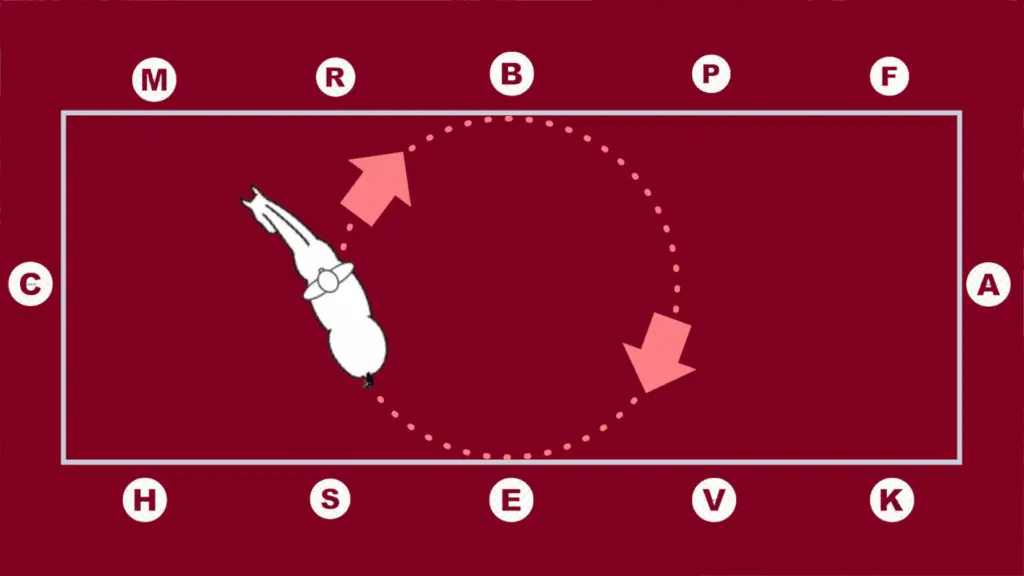
We start with our 'shoulder-out' straightening exercise - remember your hands tell you whether your horse is pushing evenly with both hind legs, and for there to be maximum power we need true straightness into two reins.
Next it's the tricky part - keeping the evenness into two reins on a 10m circle. This is key because if you aren’t straight into two reins you won’t have impulsion for the big bold medium canter on the ‘pliet line’. At the end of the 'pliet line' we collect the canter - just like we learned in the previous lesson when we were working on our forward transitions, you need to put use your leg and seat aid to ride the hind legs under and keep the energy cycling through your horses body.
The feeling under saddle is that your horse’s back and withers are lifting up under you - enjoy that amazing feeling, and also take a moment to allow your horse to enjoy feeling fabulous!
Downloadable Quick-Reference Cards
Spring: Lesson 1True Straightness
Open your outside hand to take your horse's shoulders out
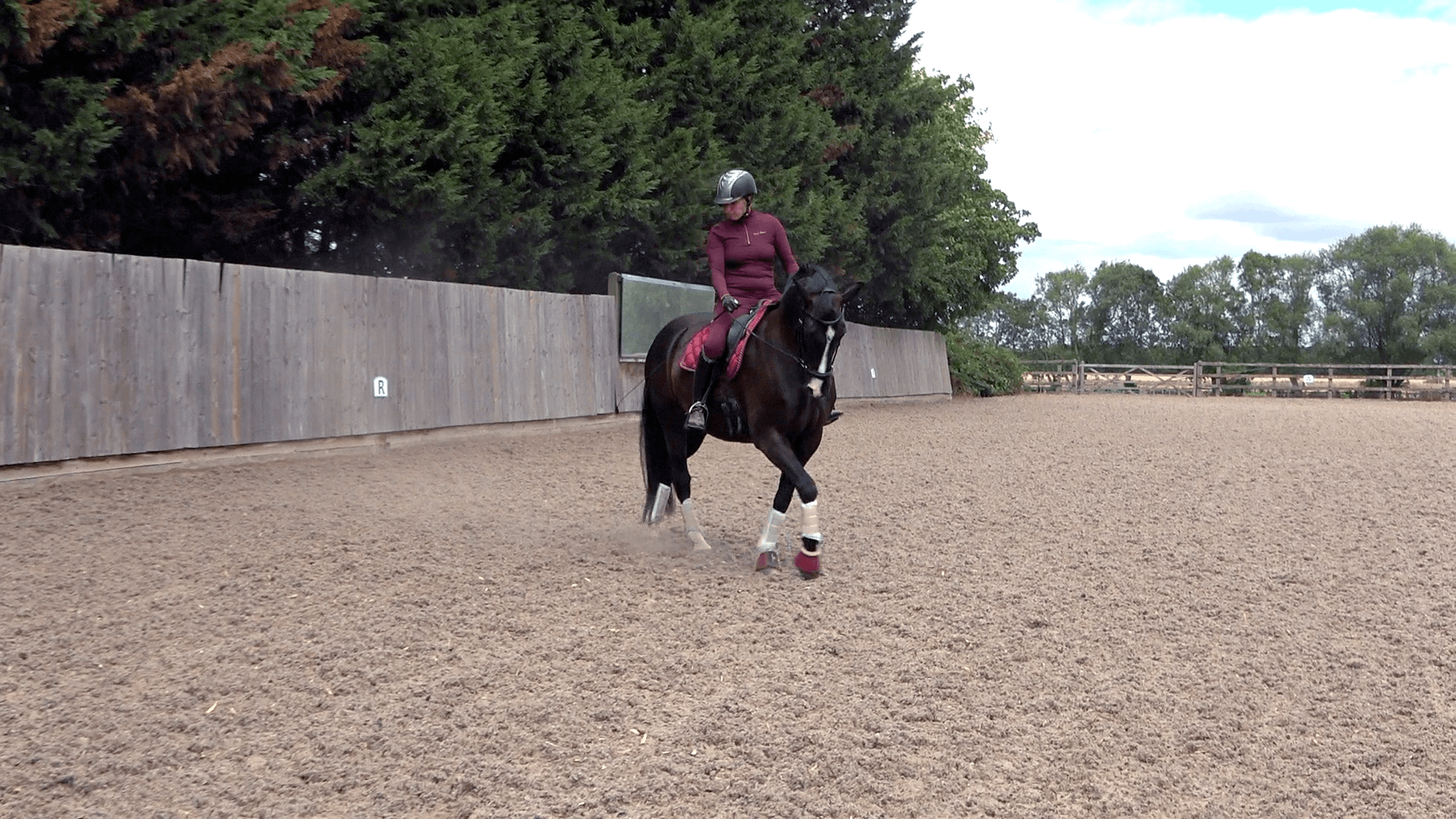
Use your outside leg to step your horse's outside hind leg under
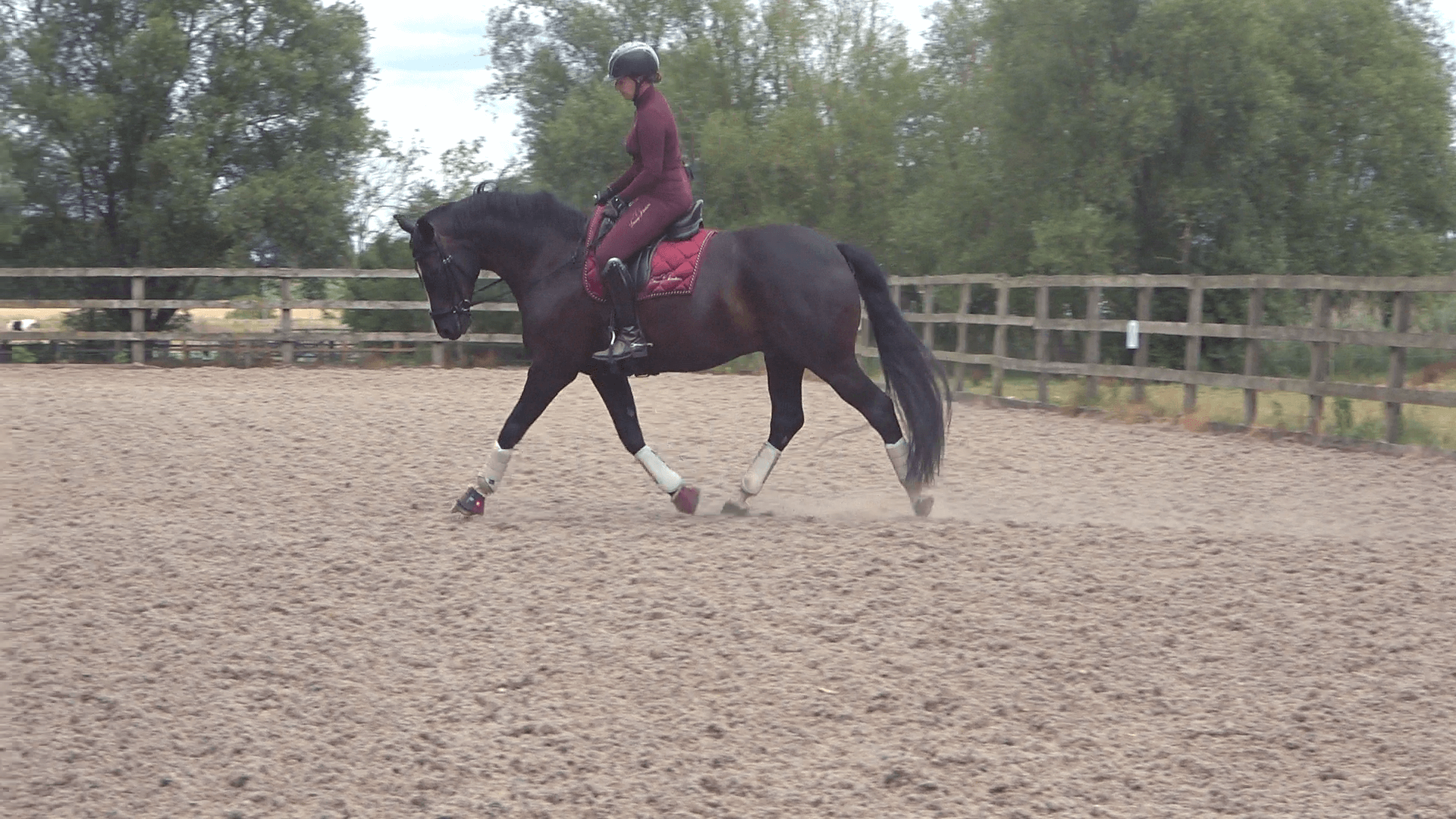
Feel for the connection from the hind leg into your opposite hand
Soften your aids and stretch to the inside as a reward
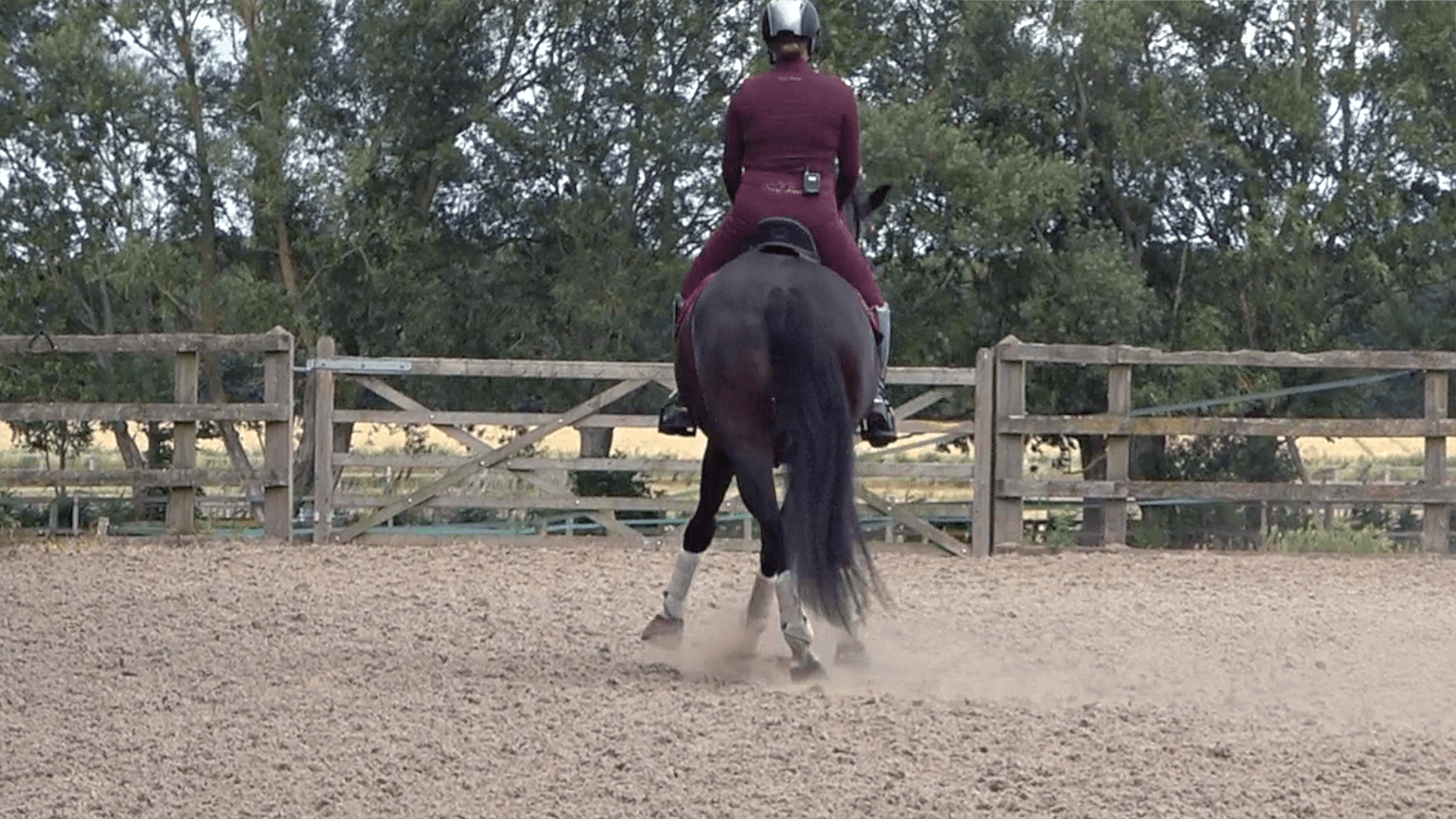
Change rein in leg yield across the diagonal
REMEMBER:
Your aim is to feel you have an even contact in two reins on the 20m circle
Your aim is to feel you have an even contact in two reins on the 20m circle
- Spring

Summer Season
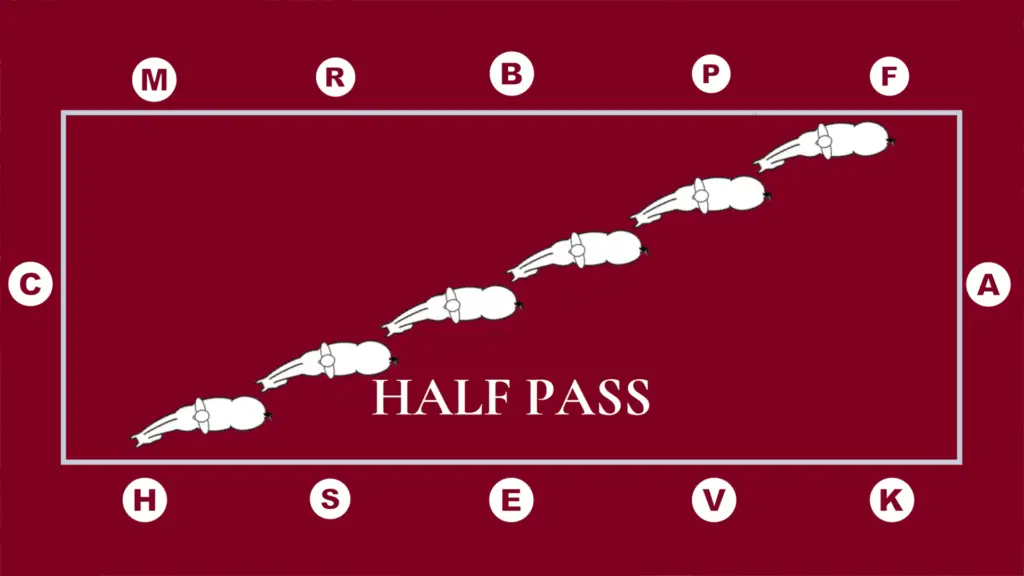
This season you will learn how to develop a beautifully balanced, correctly positioned Half Pass. Follow each lesson and your horse will soon be dancing sideways like a ballerina!
Our quick reference cards for each lesson will keep you and your horse on track!
Summer: Lesson 1
Half Pass Positioning & Aiding
The key to developing a good Half Pass... is not to ride Half Pass!
We start this season developing a fluent and correctly positioned Travers, in walk, trot and canter - which is the same as Half Pass but on the track instead of a diagonal line. Our first task is to make sure your horse is working straight into two reins. Your horse then bends around your inside leg, with your horses chest perpendicular to the line of travel. A common mistake is when the rider pulls on the inside rein to try to create bend, then the horse's chest turns out - this is incorrect.
Mistake number two is incorrect aiding and rider posture. Often I see the rider slipping to the outside and clamping the outside leg on to try to shove the quarters over - we need the exact opposite! In this lesson I’m going to teach you the correct positioning and aids, starting in Travers, as it is much easier for you to spot when you need to make a correction. Then, when it comes to the Half Pass later on, we simply move our Travers onto a diagonal line, and it will be super easy and scoring good marks from the judge!
Summer: Lesson 2
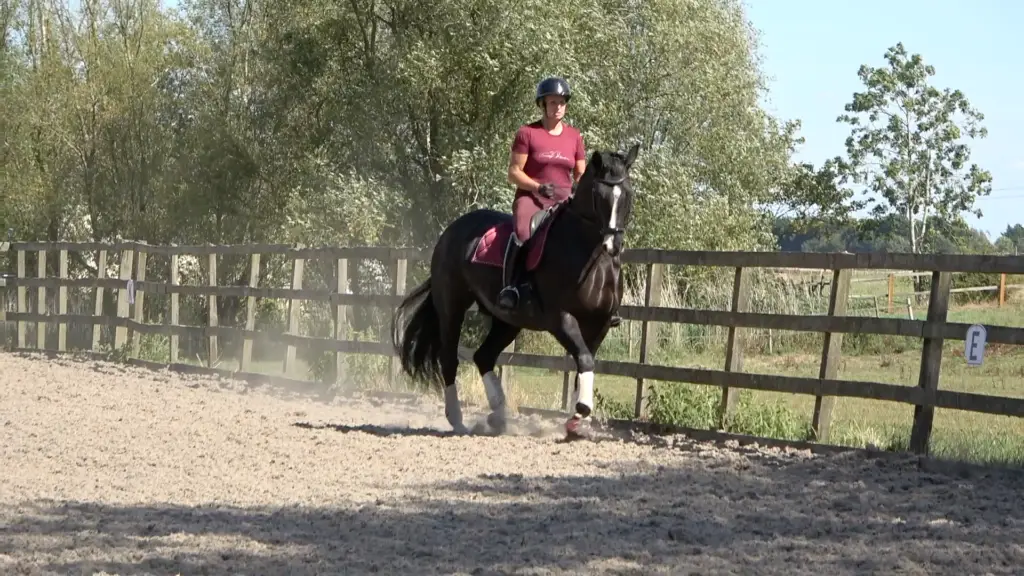
Developing Trot Half Pass
Learn how Half Pass can unlock magical cadence in your horse - this fun!
The purpose of this lesson is to develop uphill balance first of all in Half Pass, and also to develop your seat. Often I see riders becoming tight in their seat in sitting trot which kills the pace. This lesson is going to teach you to ride forwards with an effective seat in Half Pass.
In part 1, we will be 'playing' with the trot, alternating between collected and working. You will start to feel magical cadence developing as the trot steps become higher and more bouncy, which is so much fun!
In part 2, we progress to full transitions, from trot to walk, back to trot. As we learned in the spring season, the downward transition should be 'forward'. The same rules apply here - your horse should keep stepping into the bridle through the downward transition to keep the connection from the hind leg, through the body. Then for the upward transition, your horse really needs to engage their core and their outside hind leg to push up into trot, which will do wonders to improve their strength and balance, which we need to develop a beautifully uphill Half Pass!
Summer: Lesson 3
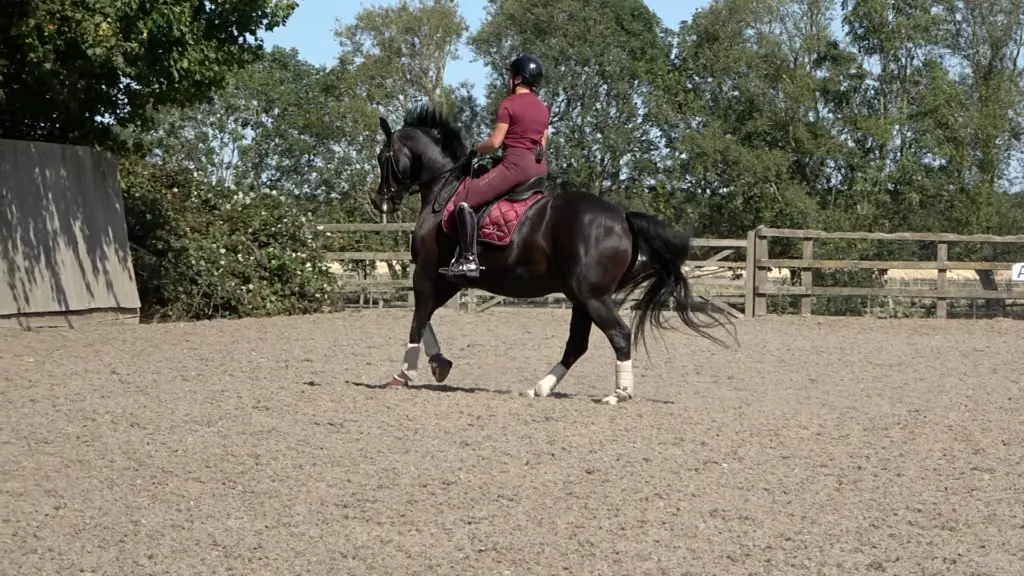
Developing Canter Half Pass
Learn how to completely transform your horses canter and develop beautiful Half Pass!
We start this lesson with a reminder of how to adjust your rider posture to collect the canter on a circle before progressing into Travers, which is the best way to develop Half Pass.
Your seat and your shift of balance in your upper body tells your horse to collect, and there is very little reliance on the reins at this stage as your horses hind quarters 'sit down', and the pelvis rotates as they then swing their hind leg further under their body to collect the canter for a few steps, and then swing your seat forwards into working canter again. This is challenging for your horse, so only collect a few steps at a time. Eventually the Half Pass which develops as a result of this work will be uphill and beautifully balanced.
This key exercise is the foundation, not only for canter Half Pass, but also for canter pirouettes because we are teaching your horse how to to read your body posture and learn not to panic when we start to compress the canter and carry the weight on the hind quarters. With this correct foundation in place, your horse will already understand the mechanics of the pirouette… how cool is that!?
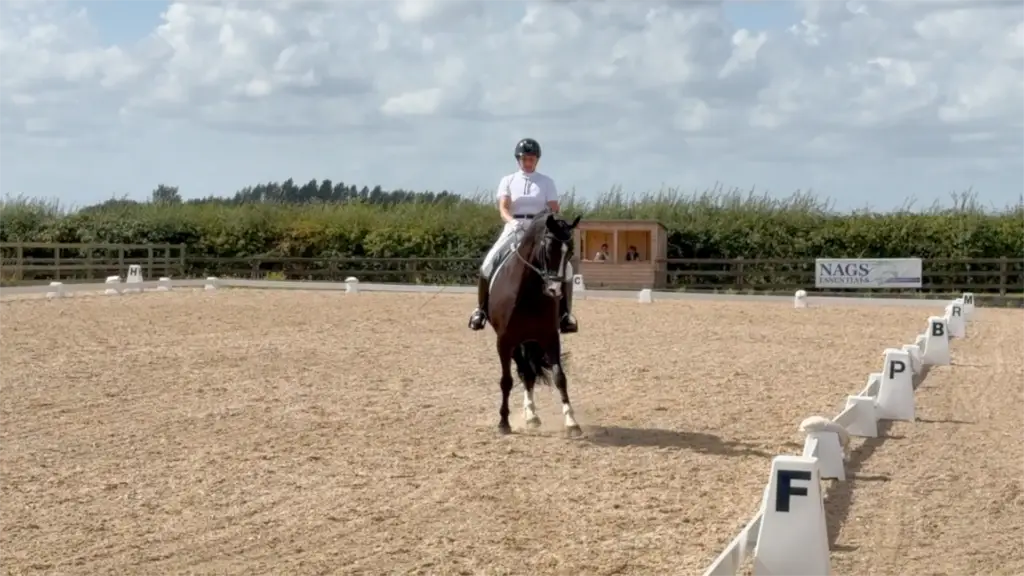
Summer: Lesson 4
Putting it to the test!
Our finale this season is Raffles debut medium 'Top Gun' freestyle!
But first, in our final lesson we progress to direct transitions from canter to walk - back to canter, whilst maintaining the travers positioning throughout the exercise. As always, I am showing you our real-life training where Raffles is learning the exercises. You can almost see the cogs turning in his brain as he is working out how to organise his body in the travers shape and perform the transitions at the same time!
My aim is to show you the 'proof of the pudding' and demonstrate that by working on all of the exercises I have taught you in this season, when we contest our debut medium freestyle at a British Dressage affiliated comptition our trot and canter Half Passes are beautifully presented and scoring good marks from the judge.
If you have been working through this season with your horse, like Raffles, you will find the Half Pass easy - simply think of riding travers along a diagonal line. Everything is exactly the same - your horses chest is perpendicular to the line of travel, with their ears and your thumbs pointing towards the marker, your weight is on your inside seat bone with your horse bending around your inside leg, and you aid with your outside leg then let it hand neutral again… enjoy!
Downloadable Quick-Reference Cards
Summer: Lesson 1Half Pass Positioning & Aiding
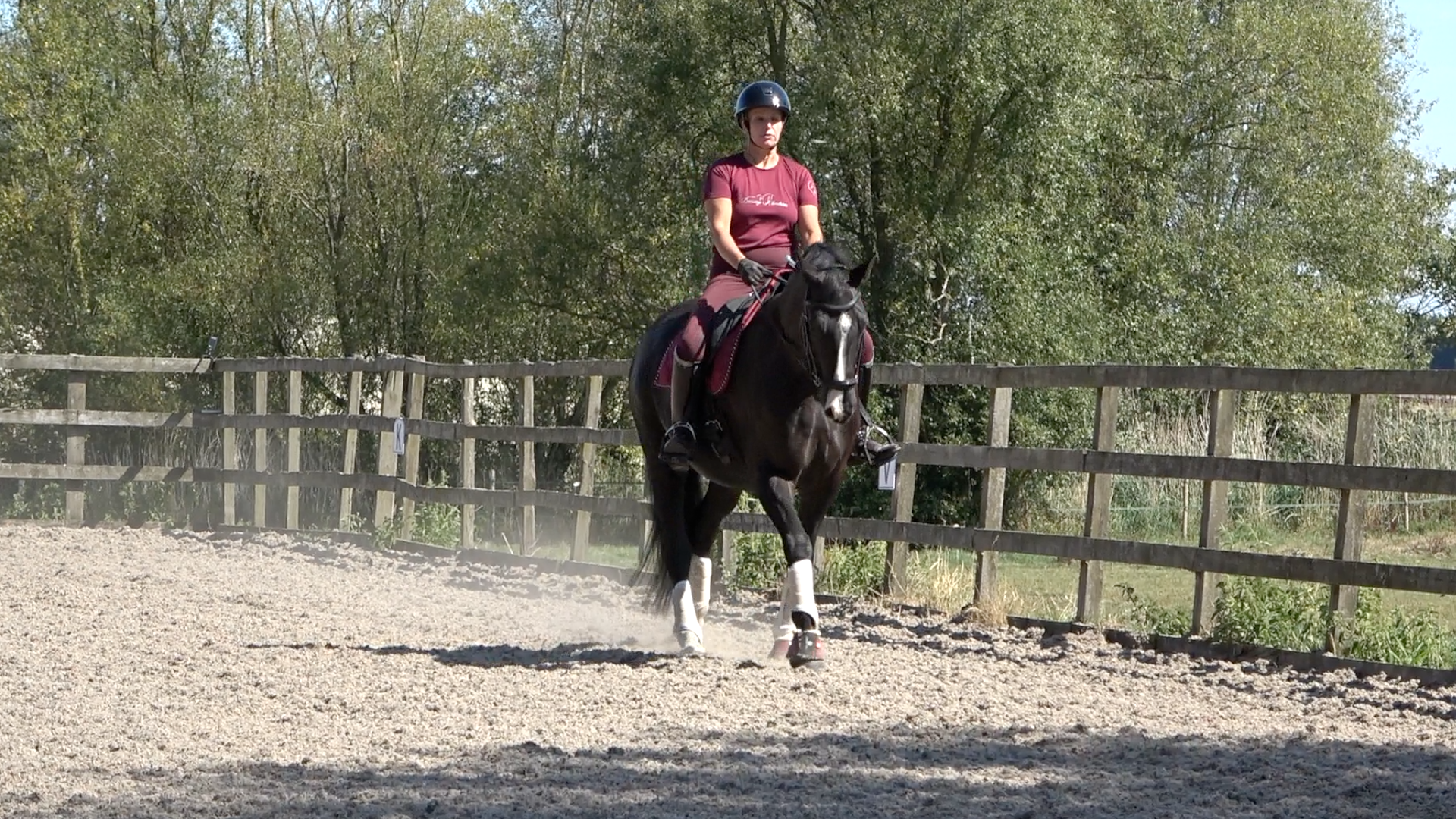
Start in walk on the 2nd track with your horse stepping evenly into two reins
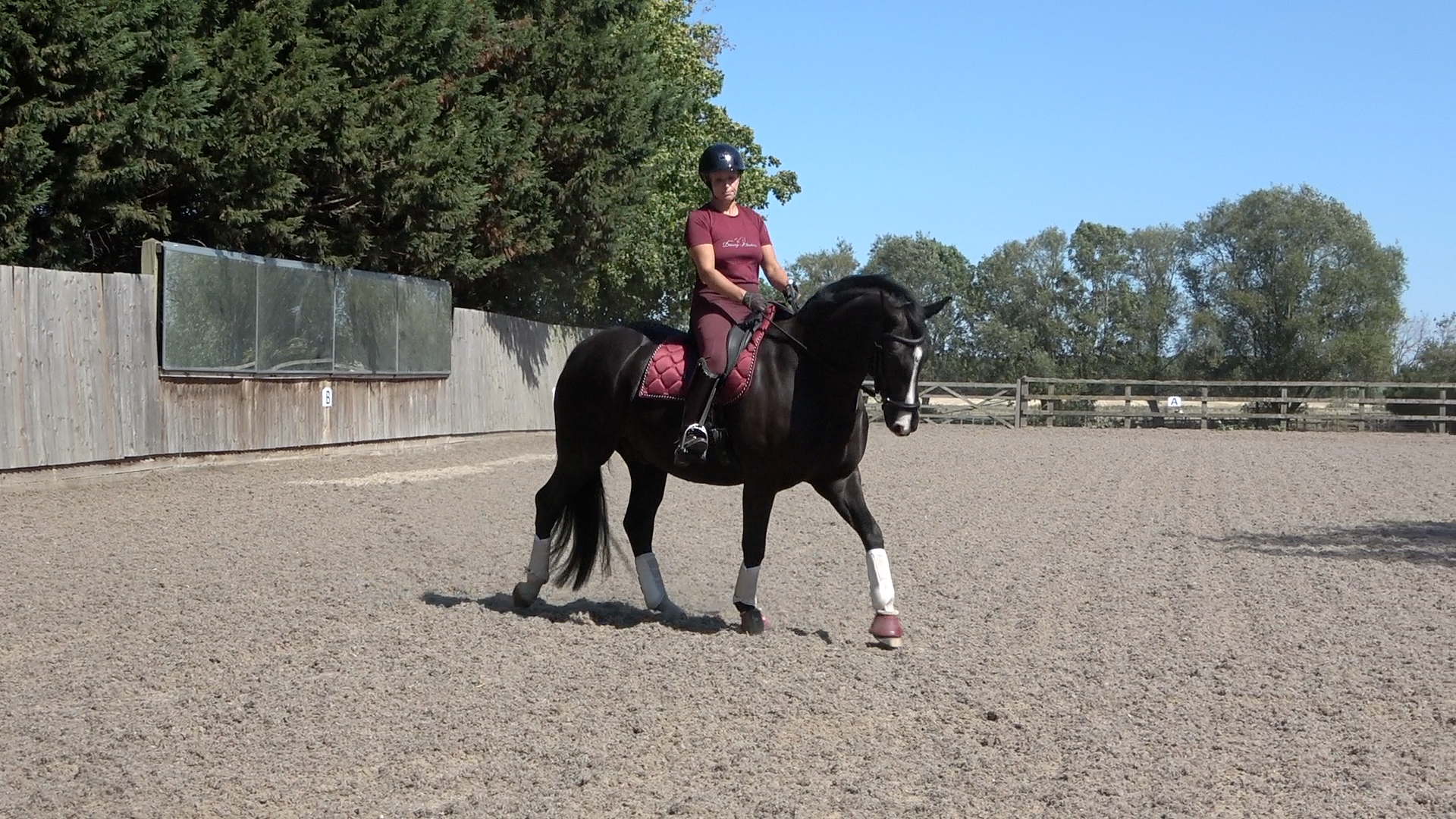
Spiral down onto a 10m circle in the corner keeping an even contact
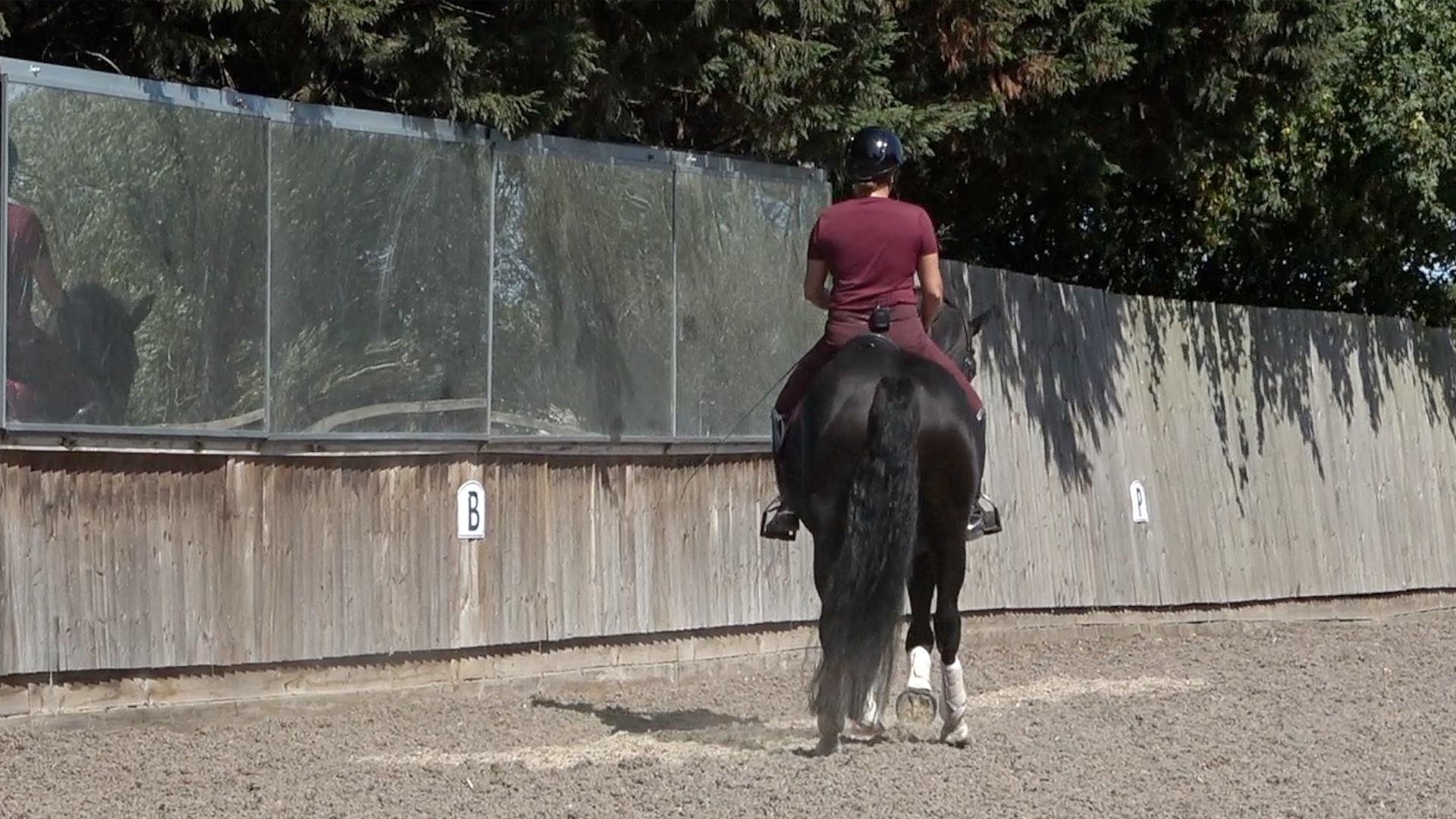
Keep your weight on your inside seat bone and apply your outside leg aid to position the quarters in.
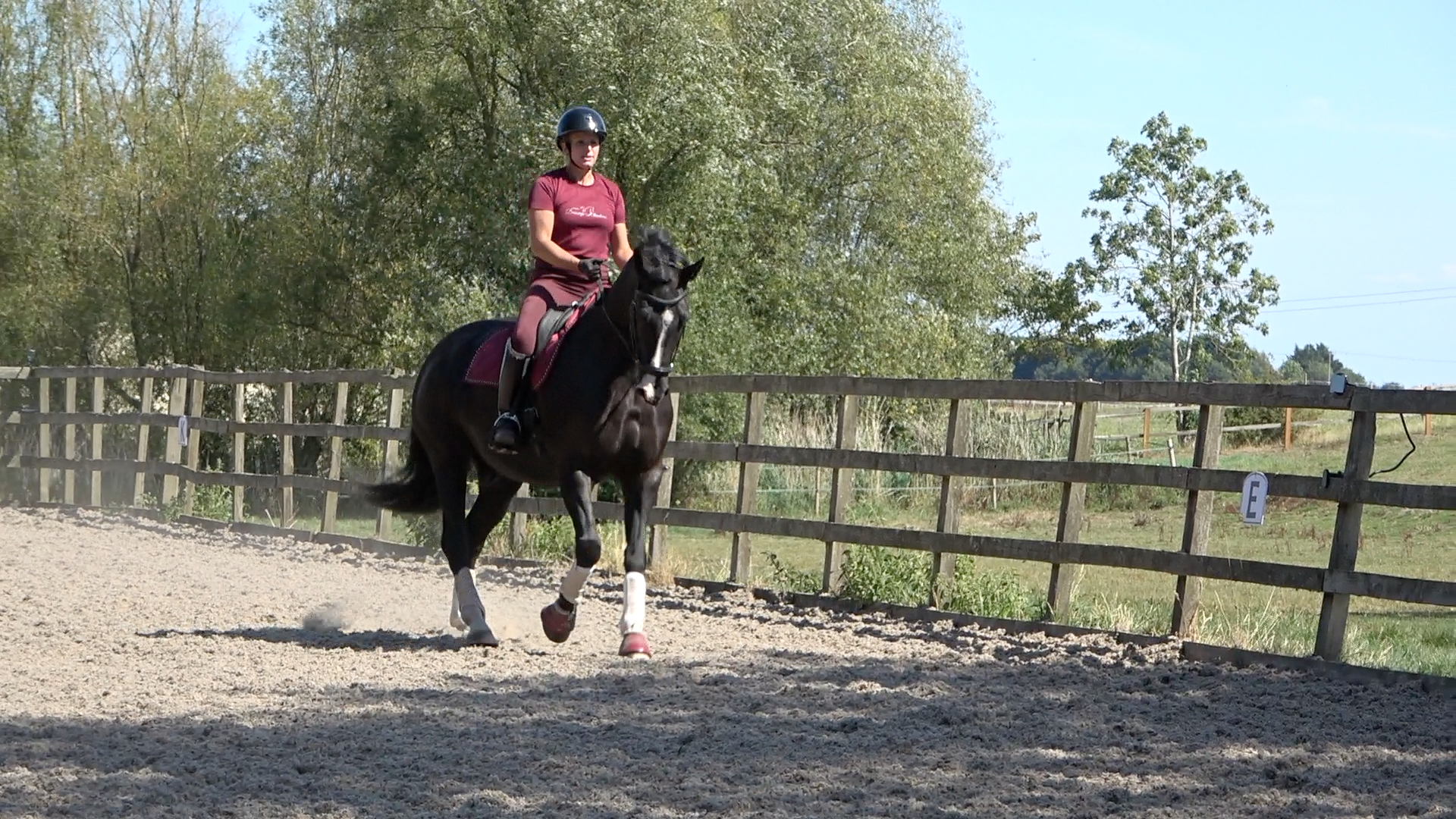
Keep your horses chest perpendicular to the line of travel. Repeat in trot & canter, then change reins.
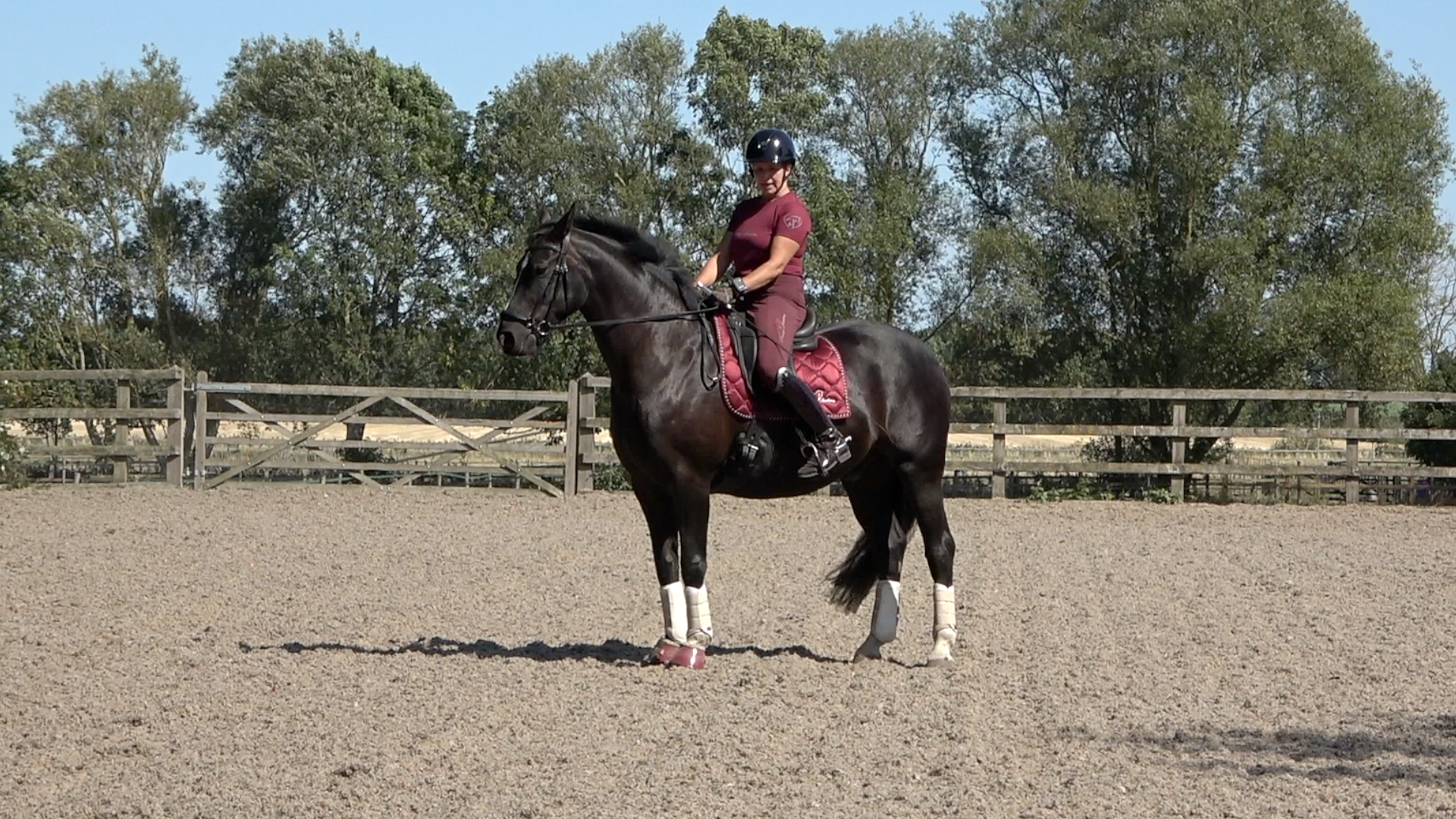
Don't clamp your outside leg on - aid then back to neutral. If needed press a whip behind your leg to make your horse more aware of your aid.
REMEMBER:
Your horse's ears and your thumbs point straight down the line. If you lose the even contact in travers, this tells you the positioning is incorrect - straighten and try again.
Your horse's ears and your thumbs point straight down the line. If you lose the even contact in travers, this tells you the positioning is incorrect - straighten and try again.
- Summer
Autumn Season
In this beautiful Autumn season we focus on creating bend through your horses body in half pass, and how to set up your corners correctly... like a pro!
Our quick reference cards for each lesson will keep you and your horse on track!
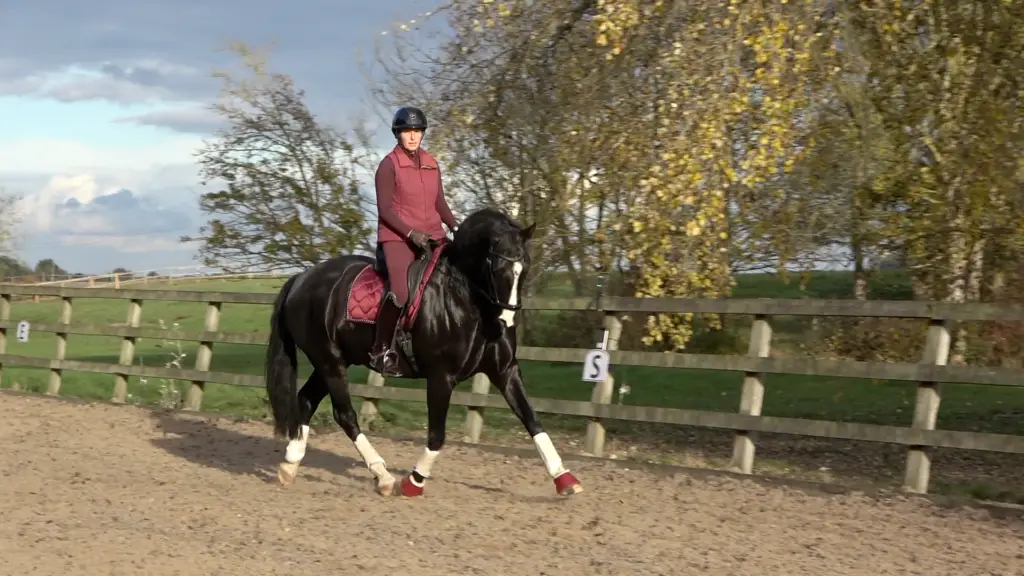
Autumn : Lesson 1
Creating Bend on a Zig Zag
This zig zag is not about travelling sideways - the aim is to shape your horses body around your leg.
In this lesson you will learn there is a clear and deliberate purpose to each step in the zig zag pattern, so that you have a clear understanding of how to shape your horse’s body. When you apply the same aids consistently each time to create a 'mould', your horse will then understand how to organise their body, so they will become light to your aids and beautifully uphill and fluent in the half pass.
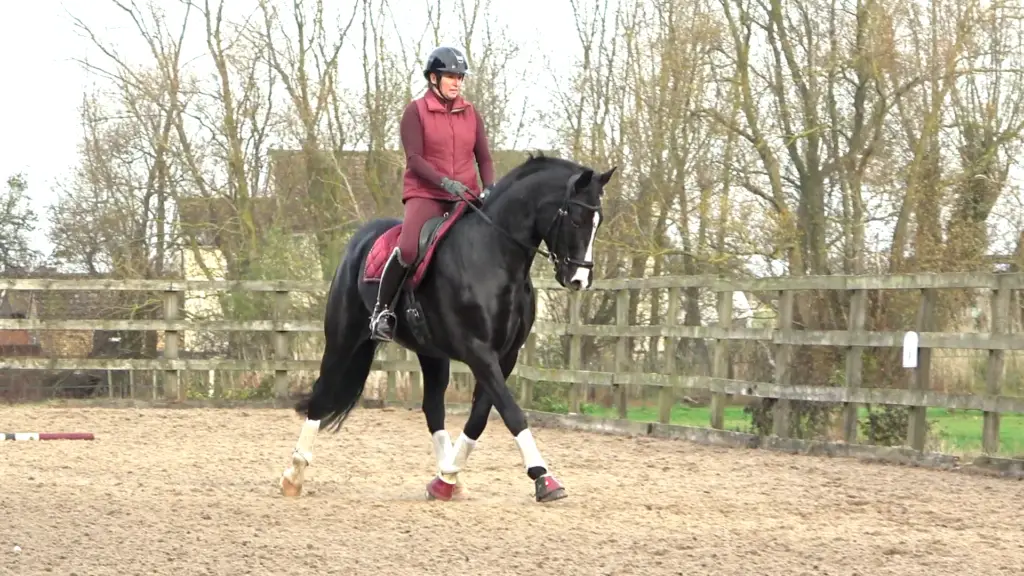
Step 1: We start in shoulder in on the quarter line, which is tricky because we don’t have the support of the fence. Remember what we learned in the elementary program when we started developing shoulder in - the aim is to bring your horse into an uphill balance.
Step 2: shift onto your inside seat bone and use our inside calf to flex your horses rib cage. You can yield towards the track, a few steps, but this is not about travelling sideways, it’s about you recognising the feeling of your horse softening to the inside and wrapping themselves around your inside leg - the aim is to feel the shaping of your horses body into a ‘mould’ which you have formed with your inside leg and outside rein.
Step 3: half halt with your outside rein to prepare your horse then turn your head to look diagonally across the arena. Your head is a weight aid which tells your horse to move in the direction your are looking into HP - the aim is lightness and fluency in the half pass. It’s not about pulling on your inside rein and and clamping your outside leg on and shoving your horse sideways!
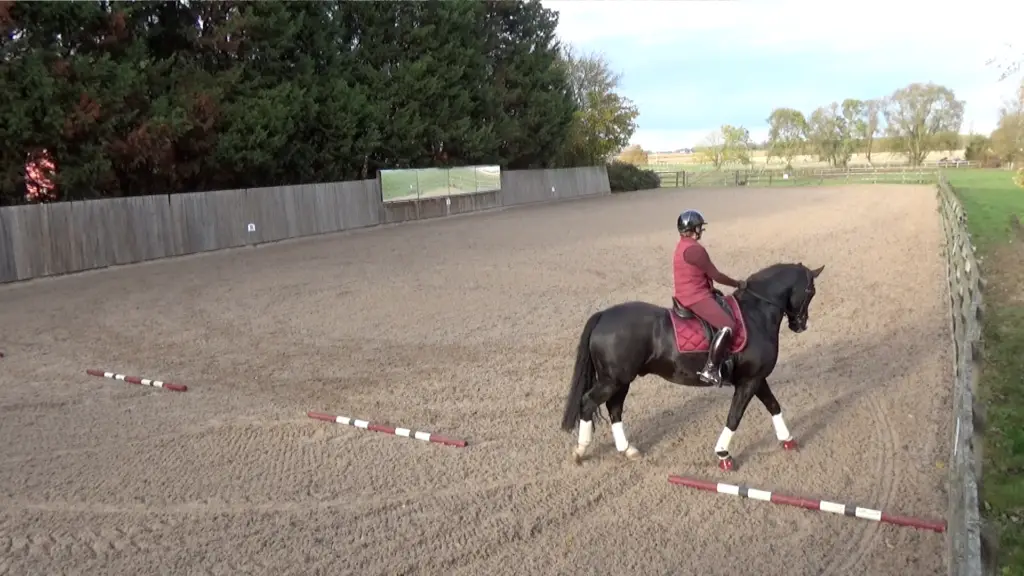
Autumn : Lesson 2
Setting up the Corner
In this lesson I will teach you how to set up the corner, like a pro!
Corners are really important, especially from this level onwards - they are your golden opportunity to prepare and rebalance your horse for the next movement, and make any adjustments so that you can improve your accuracy. If you watch the top riders you will see this is what gives them you a beautiful polished performance, it seems as though they spend hours in the corner, so the trick here is to start early… way before the corner!
In this lesson we are going to use the same component parts we learned previously in lesson 1 to set up for the corner correctly. We’re going to start in walk, focusing on the short end and 2nd corner, and I will show you exactly what to do step-by-step.
Step 1: As I am riding past A or C I am already positioning the shoulders-in. The trick here is to start turning the shoulders early!
Step 2: This is one of those ‘think it, don’t do it' moments, where I want you to think ‘leg yield’ but we're not actually moving sideways. The aim is to flex your horse through the rib cage.
Step 3: I keep my weight on my inside seat bone and aim to create the same 'mould' around my inside leg which we learned previously in lesson 1.
Step 4: I turn my head towards the diagonal line and we move off fluently into the HP it should look like it flows.
The aim of this exercise is to create the ‘mould' consistently, in the corner. If I feel I haven’t quite got the right shaping, I will circle and try again. By working on this exercise and focusing on the corner, you will find the Half Pass will just flow and it will feel beautifully light... and easy!
Autumn : Lesson 3
Magic Squares & Half Pass
I love squares - they really are magic! In this lesson we use the corners to accurately set up half pass from the centre line.
In the previous lesson we condensed the components parts of our 'zig zag' onto the short end and the 2nd corner, so by now your horse should understand the 'shaping' in their own body when you create that 'mould' consistently, and the set up for half pass from the corner
At medium and advanced medium level, the half pass is often from the centre line - so our 'magic squares' are going to help to set us up accurately, with beautiful shaping and balance.
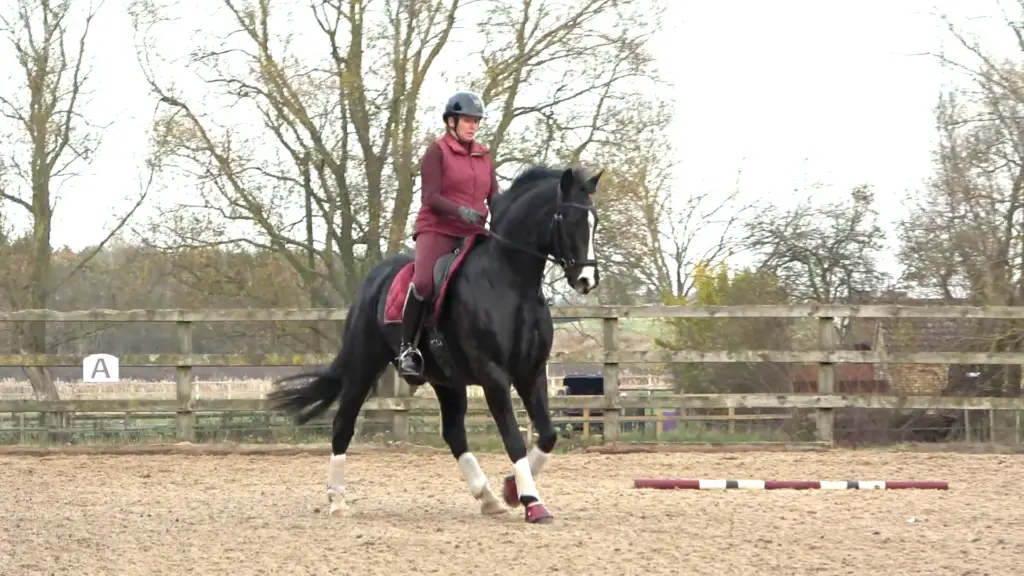
We start on a 20m square in shoulder-in at the end of the arena just like the previous lesson, except this time we have 4 corners instead of just 1 - so you need to get organised quickly! Gradually we reduce the size of the square down to 15m and finally 10m which sets us up accurately on the centre line, ready for half pass.
The aim in this lesson is to create the 'mould' consistently in every corner so that you and your horse re developing the skill sets you need to take you up to advanced level and beyond. By the end of this season your Half pass, pirouettes, and your overall performance overall is going to become much more grown up and proficient. Enjoy!
Autumn : Lesson 4
Canter Squares & Half Pass
In this lesson your canter and half pass will be completely transformed - like magic!
Squares are not only a brilliant tool for practising your corners, but they also the building block for pirouettes. In this lesson we up the criteria and progress to canter, working on the same magic squares as learned in the previous lesson. Each corner will come up quickly - especially on the 10m square, and you really will start to feel your horse 'sitting' their pelvis down and lifting their inside shoulder.
Gradually it will begin to feel more like a 1/4 pirouette. Not only will we be aiming to create the same 'mould' around our inside leg which we learned previously, but this time I really want you to focus on is using your seat and rider posture to help your horse learn to organise their own body in the corner - a little tip for you is if you focus on the pommel of the saddle and angle it inwards and upwards, then you will be in the correct rider posture.
Finally, we then take this beautiful uphill posture into the half pass from the centre line - that’s the aim!
Downloadable Quick-Reference Cards
Autumn : Lesson 1Creating Bend on a Zig Zag
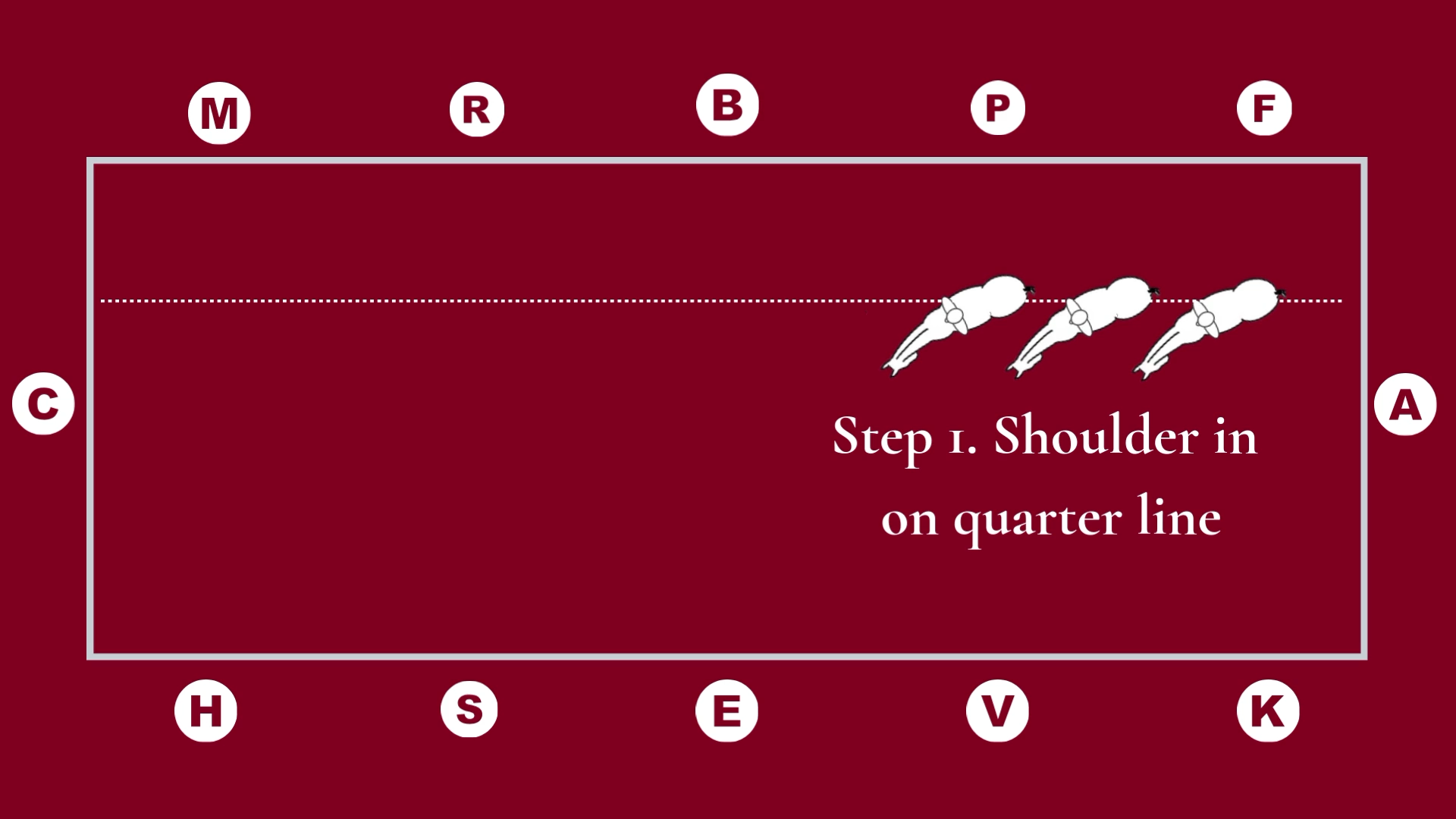
Start in walk in shoulder-in on the quarter line
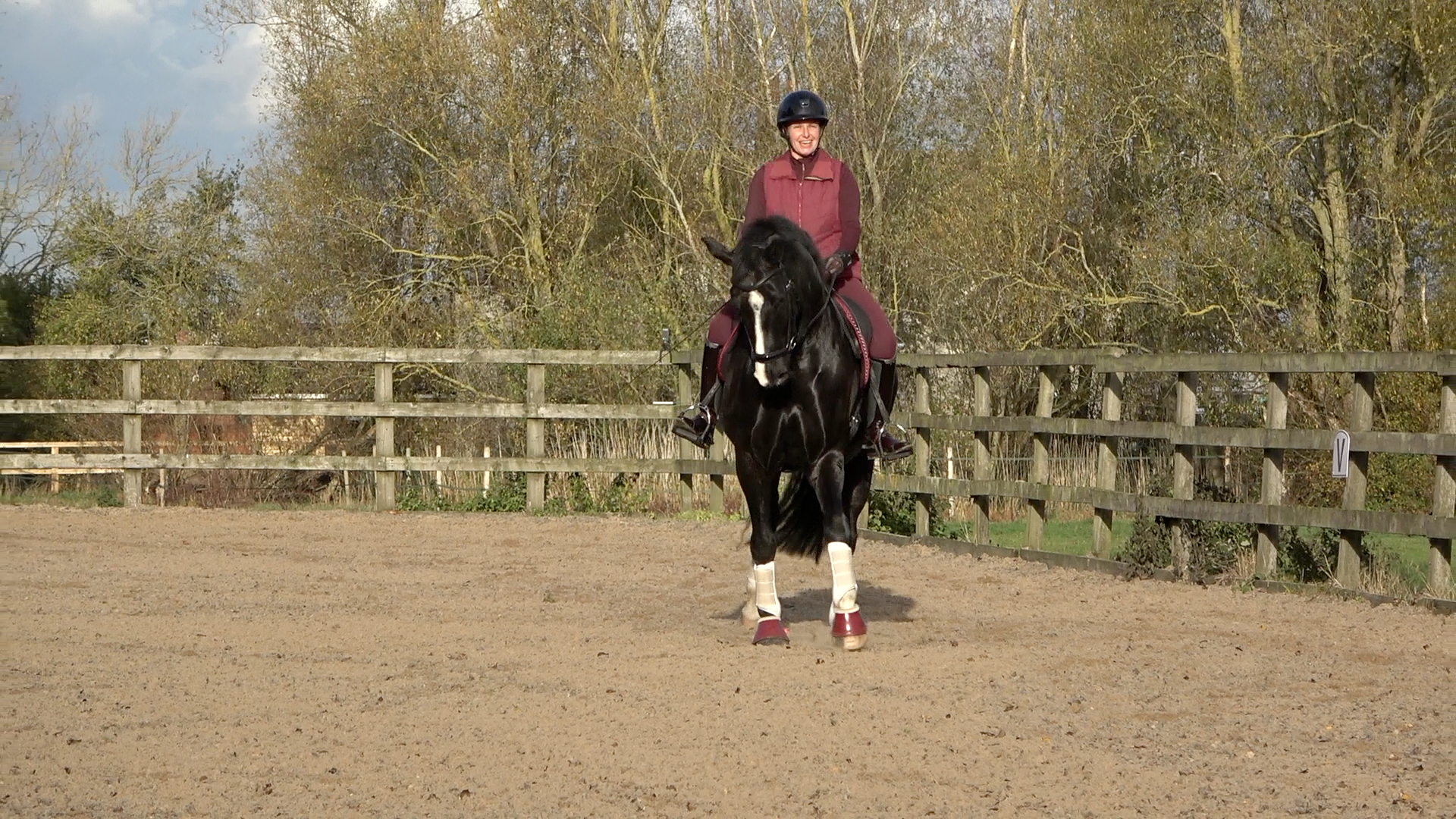
Move both hands to the inside, engage the inside hind leg, and look straight ahead.
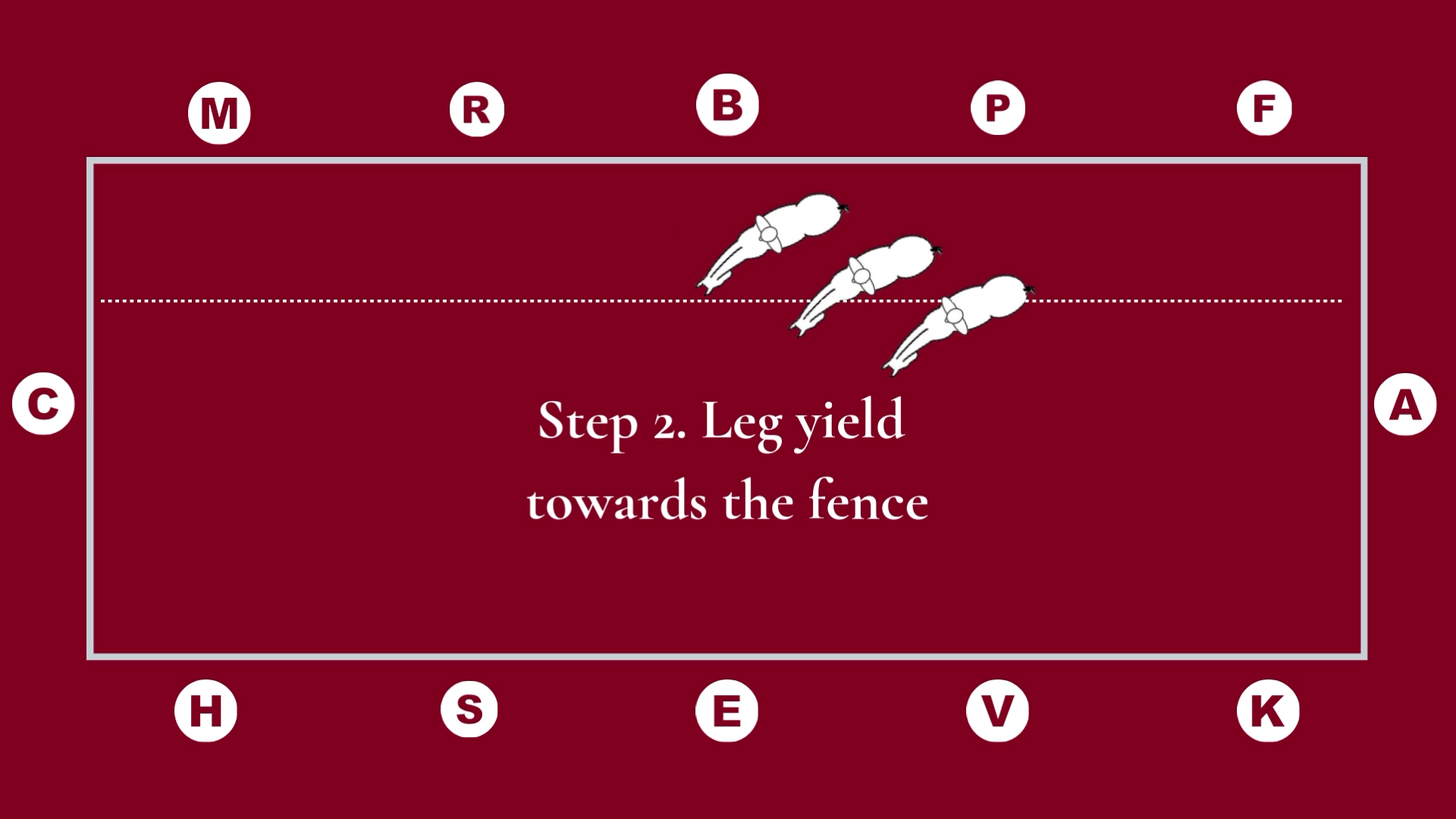
Shift onto your inside seat bone and use your inside leg to yield the rib cage
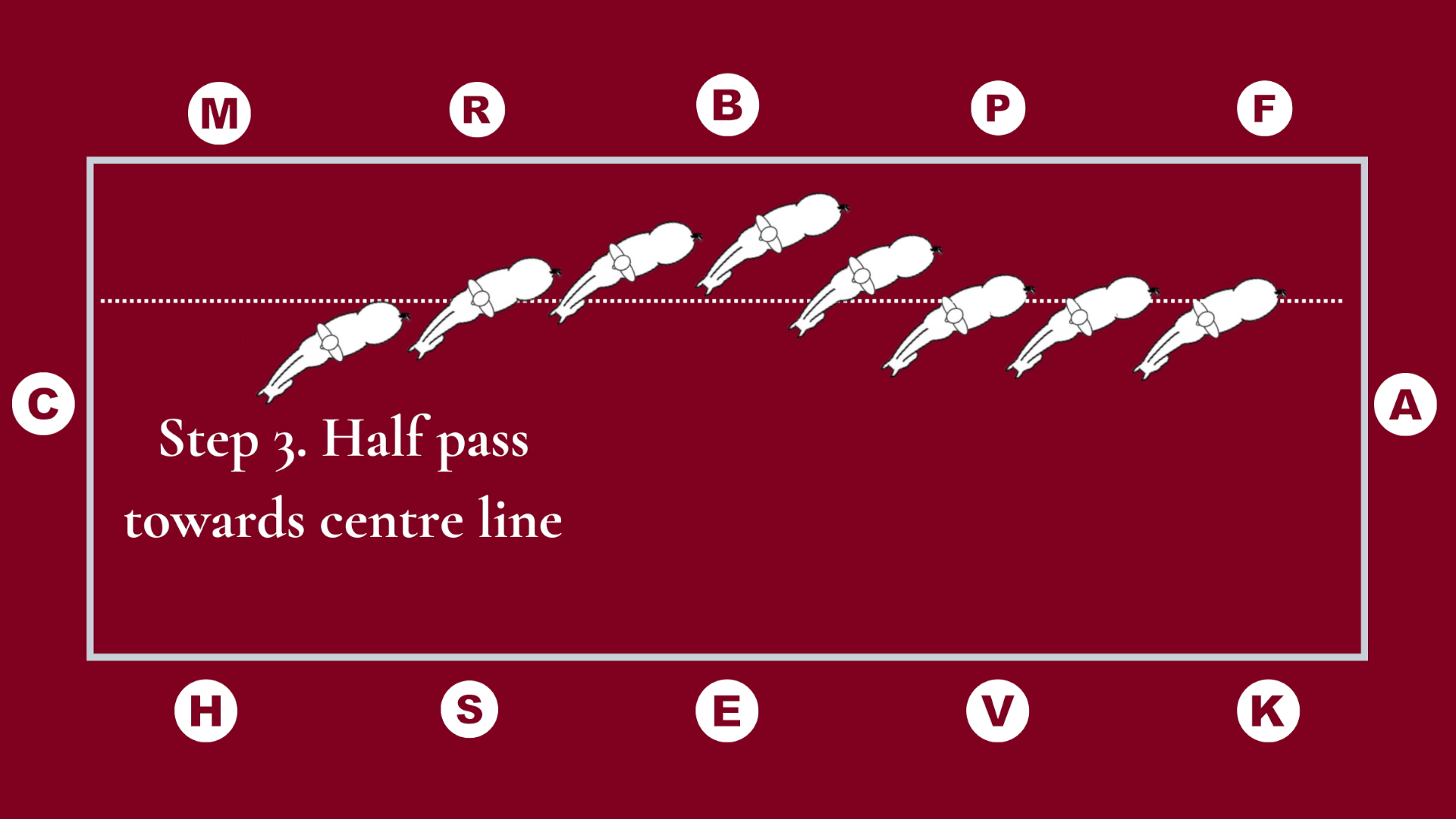
Half halt, turn your head to look onto diagonal line, then half pass for a few steps
Stay on the same rein and progress to trot, then canter. Change rein and start again in walk.
REMEMBER:
Aim to maintain shoulder-in positioning throughout the pattern. Try to resist the temptation to move your hands to the outside to yield sideways - use your inside leg!
Aim to maintain shoulder-in positioning throughout the pattern. Try to resist the temptation to move your hands to the outside to yield sideways - use your inside leg!
- Autumn
Winter Season
This season you will learn how to nail the dreaded Walk Pirouettes, then we start developing Flying Changes right from the beginning!
Our quick reference cards for each lesson will keep you and your horse on track!
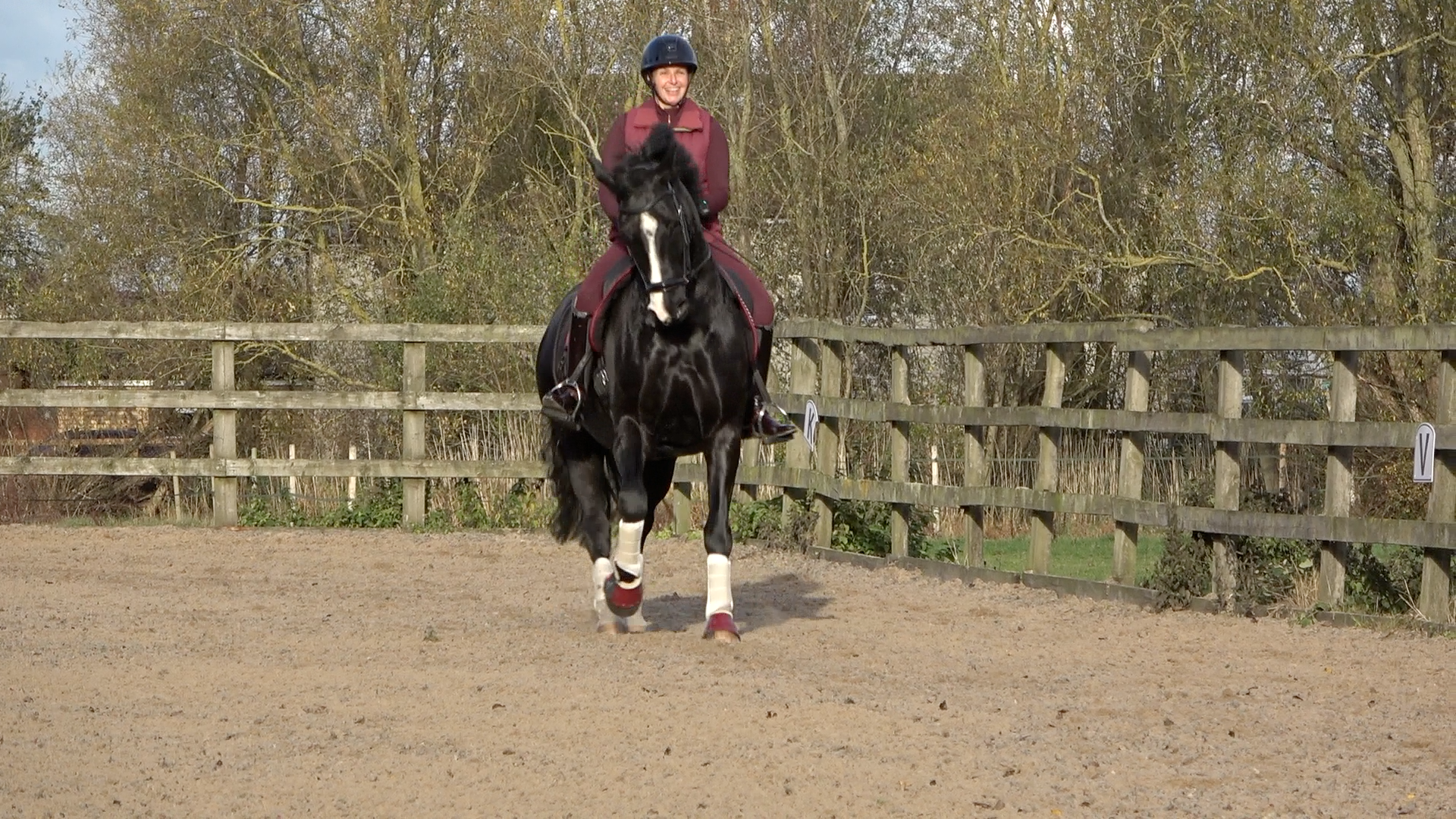
Winter: Lesson 1
Pirouette Foundation
This lesson is all about developing the adjustability and body alignment needed for beautiful pirouettes.
You will learn how to make micro-adjustments to your horse’s shoulders and quarters, setting you up for both walk and canter pirouettes (as well as preparing you for flying changes at the end of this season). When you can put the shoulders and quarters exactly where you need them while maintaining a lovely shaping around your inside leg, you have everything you need for success. Your horse will learn how to organise their own body, follow your aids, and stay soft and supple.
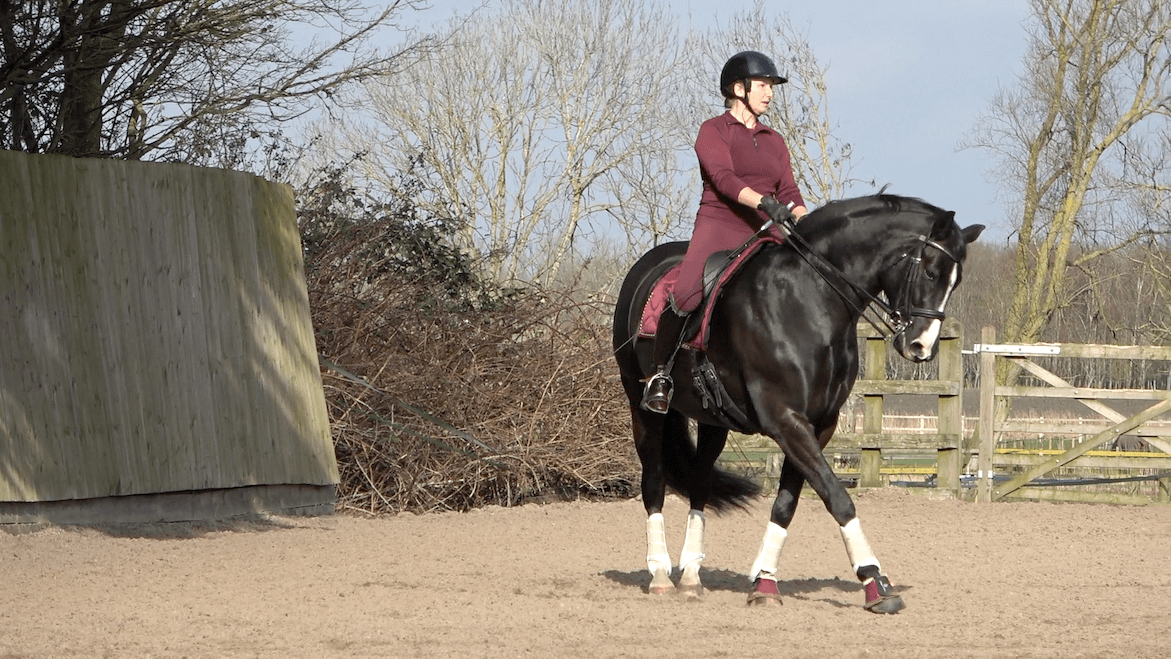
Step 1: Start on a 15m circle in travers. This is the perfect baseline to test your alignment. If your horse is more advanced, you can go a bit smaller; if they are less advanced, keep it slightly bigger.
Step 2: To make the circle smaller, bring both hands to the inside to yield the shoulders in, maintaining that vital shape around your inside leg. Think of it like riding a half-pass towards the centre of the circle! To make the circle bigger, take both hands to the outside to yield the shoulders out. You only need to move a few metres either way—it is the ability to adjust that is key.
Step 3: Progress the exercise from walk to a nice, bold canter. Do not try to collect the canter yourself at this stage; let the exercise do the collection for you so your horse learns to commit their hind legs. If you lose impulsion, simply ride forward and straight on the circle to reset.
Tracy's Tip: Watch out for the right rein! Horses often try to evade the aids here by swinging their quarters in too far. Keep the travers at a clean 35-degree angle. If they over-swing, use your inside leg to ride forward and straight, then try again. When things get sticky or your horse gets tight, remember it is always easiest to go bigger. This keeps the technical question the same but on an easier line, allowing you to build confidence!
Winter: Lesson 2
Walk Pirouette
Walk pirouettes are most rider's worst nemesis! In this lesson I will teach you how to nail them, every time.
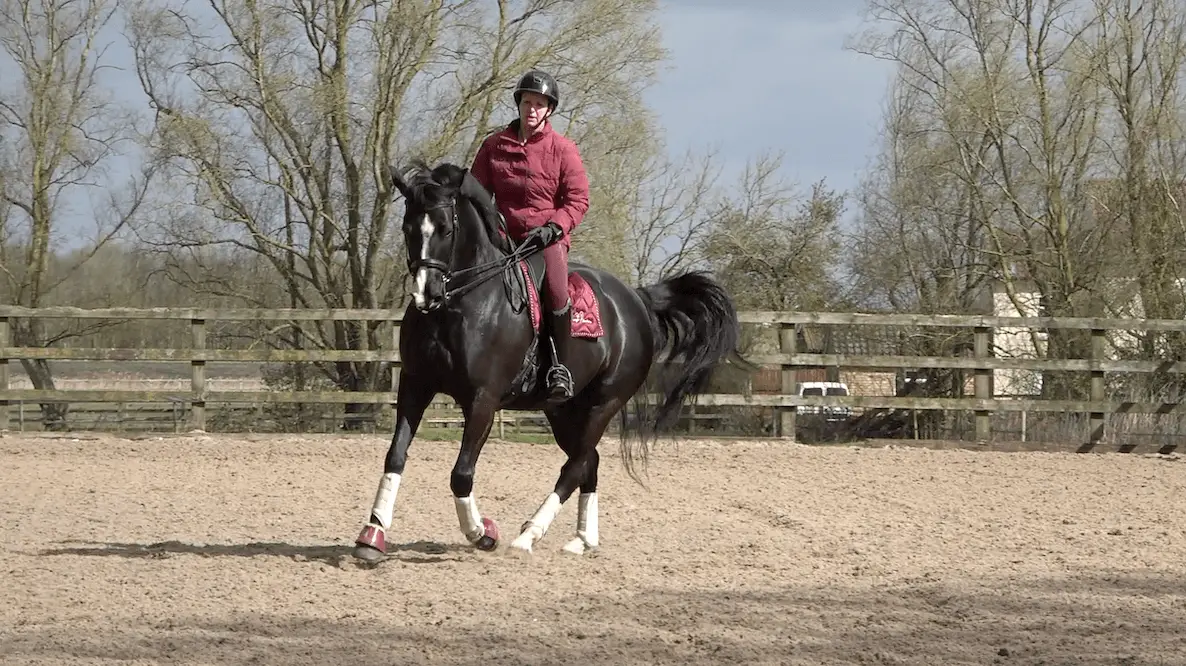
The biggest mistake riders make is training the half pirouette from the finish point. Because the movement happens so quickly in a test, neither you nor your horse have time to adjust or learn. In this lesson, you will discover how to stay in the movement longer to establish the perfect feeling. Your horse will learn to use their inside hind leg as a pivot point rather than crossing over, stepping out, or getting stuck.
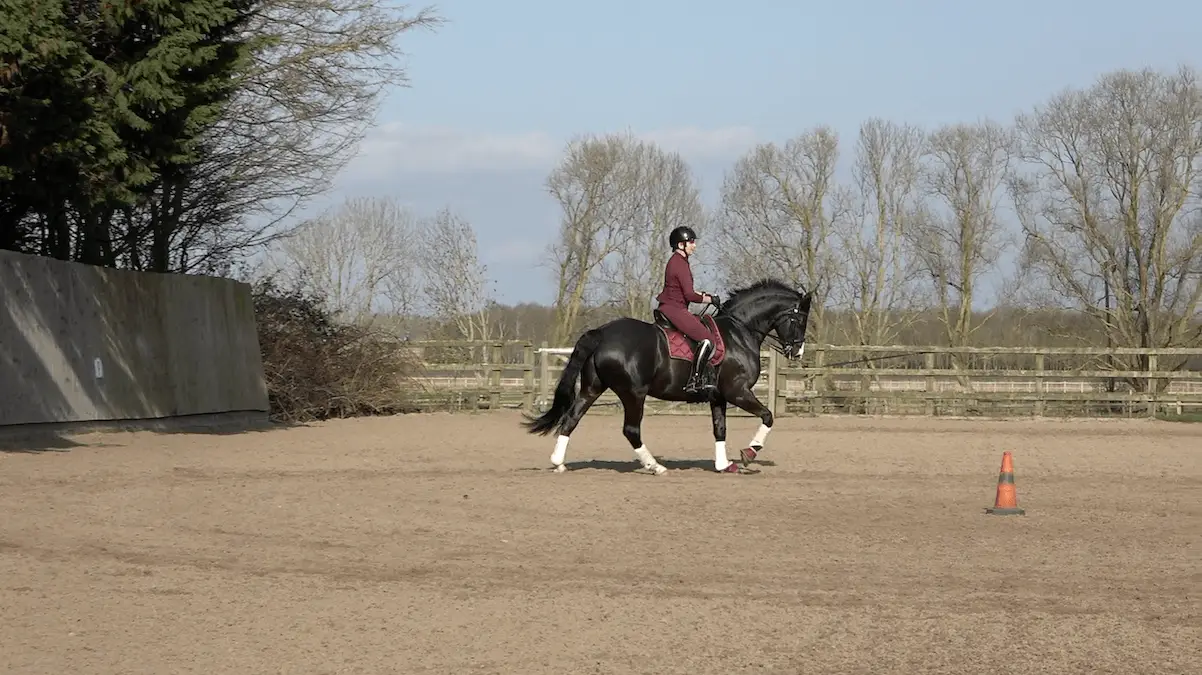
Step 1 (Spiralling Down): Start in travers on a circle and spiral down smaller and smaller until the hindquarters are close to the centre cone. Focus on the inside hind leg and encourage it to step wide towards the cone. Look for a distinct rocking motion just behind the saddle—this "wide step" teaches you the exact feeling of a correct pivot.
Step 2 (The Approach): Approach from a straight line in a collected walk using a shoulder-fore position. A few steps before the pirouette, transition into shoulder-in to shape your horse’s body around your inside leg and flex with the inside rein.
Step 3 (Commit to the Pirouette): Half-halt on the outside rein and turn your head toward your inside shoulder to use your head as a weight aid. At the same moment, use your outside leg to cue that inside hind leg to step wide, guiding the horse's shoulders smoothly around the hindquarters.
Step 4 (Keep Turning): Do not exit after just a half turn! Stay in the pirouette for 1.5 to 2.5 whole turns until you feel that correct swinging motion under your saddle. To exit, look straight down your line and ride forward off your inside leg back into shoulder-fore.
Tracy's Tip: Do not make the common mistake of approaching your walk pirouette in travers! If you start in travers, the quarters are already off the line, leaving the shoulders behind. You will end up adding way too many steps, and your pirouette will become enormous. Always approach in a shoulder-fore position, transition into a shoulder-in for a few steps to establish your shaping. This keeps the shoulders beautifully out in front where they belong!
Winter: Lesson 3
Starting Flying Changes
Is it a bird, is it a plane? This lesson demonstrates the unfiltered reality of starting the flying changes, right from the beginning!
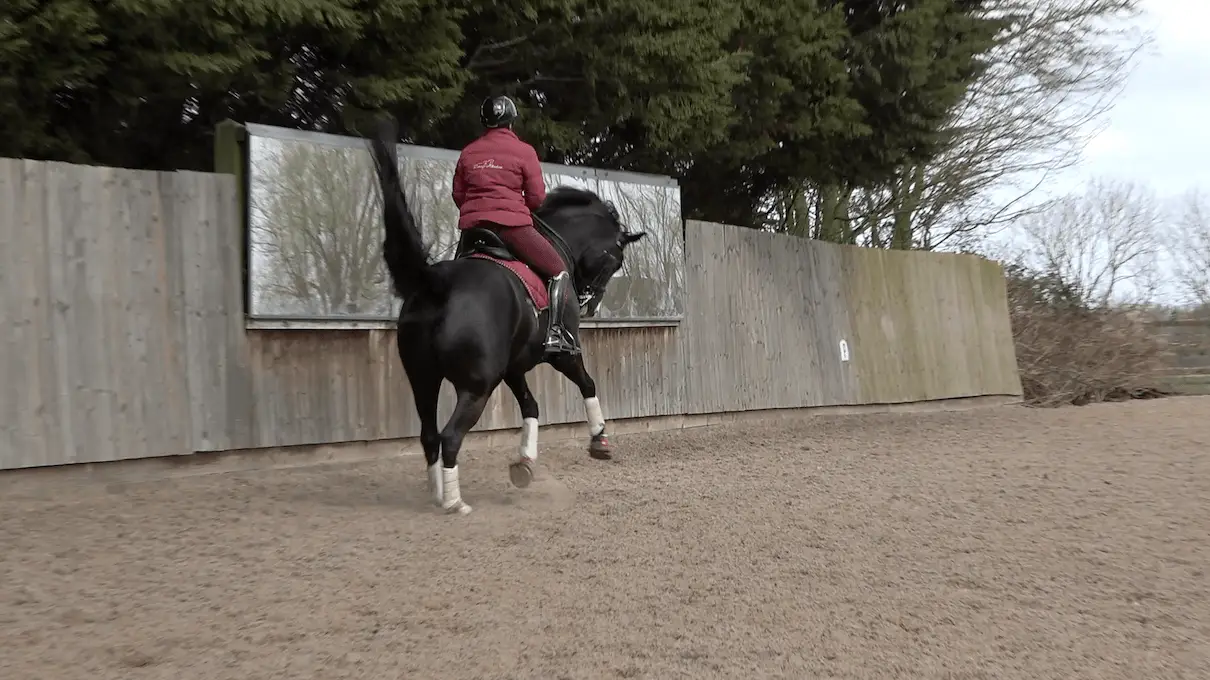
Flying changes are one of the most difficult movements to teach. I feel it is very misleading when you see training videos on the internet demonstrating flying changes, making it look effortless with horses who are already are established. In this video Raffles is genuinely learning, so expect some 'interesting' interpretations in the beginning! The key to success is consistency. In this lesson I will start by teaching you the precise timing of your aids, so you are clear and consistent every time you ask your horse to do a flying change.
Step 1 (Learn to Count): Find the rhythm of the canter by counting out loud. Start a 4-beat loop (1, 2, 3, 4) every single time the horse's inside foreleg hits the ground.
Step 2 (Time your Aids): The flying change occurs on beat 4. To prepare, slide your "new outside" leg back behind the girth on beat 3. Then, apply the actual cue to change on the half-beat between 3 and 4.
Step 3 (Half-10m Set-Up): Start in canter on a 10m circle. As you return to the track, head onto a short diagonal line. This is the exact same pattern used for simple changes in the Elementary Program, which gives your horse a familiar stepping stone.
Step 4 (Position and Visualise): Ensure the canter is active and uphill with enough "jump". Just before asking for the change, position the horse's shoulders into the "new shoulder-fore" alignment. Look up, and visualise the change happening out in front of you.
Tracy's Tip: Short-coupled, compact horses (like Raffles) often struggle with single changes in the beginning. Because their bodies are compact, they think they need to change in front first or go "croup high" in order to clear space for their hind legs. If your horse struggles or changes late behind, don't panic or get stressed! The great news is that compact horses who find single changes tricky often learn advanced tempi changes much easier later on. Be patient and trust your training!
Winter: Lesson 4
Developing Flying Changes
This lesson will teach you the key set-ups to take the flying changes to the next level.
In the beginning, when your horse is still learning the mechanics of the flying change, the movement happens so quickly that it is incredibly difficult for the rider to feel if the change was correct. In this lesson, you will discover my unique visual trick to spot a "clean" change instantly, alongside a training set-up that gives you all the time you need to organise the canter before you ask for the change.
Step 1 (Spotting a Clean Change): Have a helper stand on the side the horse is changing towards. Instruct them to focus their eyes directly on your lower leg at the centre of the horse. Using only their peripheral vision, they must watch the pair of front and hind legs closest to them. In a clean change, that pair of legs will swing forward together, completely parallel. If they move separately, the change is incorrect.
Step 2 (Leg Yield Set-Up): Start on a 10m circle, then head straight down the centre line. Leg yield back to the track into counter canter. This pattern gives you a massive advantage: instead of rushing into the change at a fixed spot, you can stay in counter canter for as long as you need to sit your pelvis down, engage the new inside hind leg, and re-establish a quality, uphill canter.
Step 3 (Manage the Anticipation): If your horse gets keen or tries to predict the change, stay calm! Simply circle to start again, or transition to a walk, pick up the counter canter, and resume the exercise.
Step 4 (Recognise the Progression): Look for positive milestones. A horse moving from a "croup-high headstand" or a "late change" to jumping both hind legs together - this is a massive win. It shows they are actively trying to figure out how to swing that new inside hind leg through.
Tracy's Tip: Keep your change training playful and fun! You can vary this set-up with half-pass back to the track instead of leg yield, or start from the 3/4 line to make the angle steeper. You can even leg yield in from the track and ask for the change on the quarter line to fix a crooked side. However, never practice a change on a corner. This almost always produces a 'late change' which is hard habit to correct.
Downloadable Quick-Reference Cards
Winter: Lesson 1Pirouette Foundation
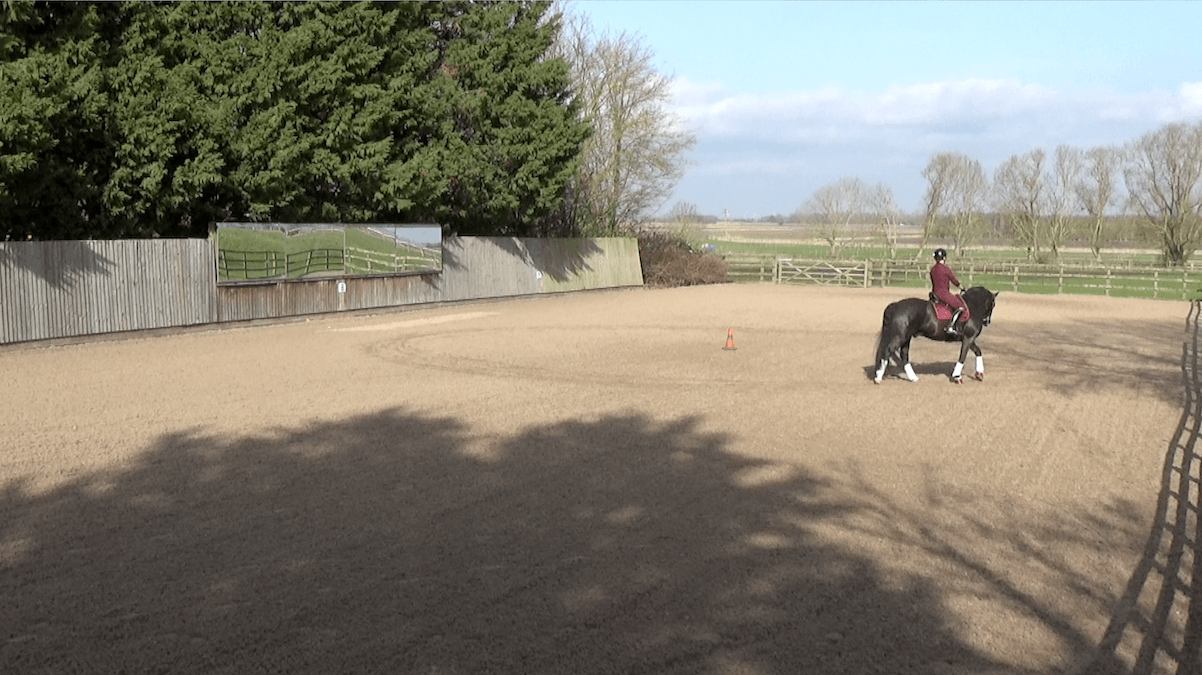
Place a cone in the centre of a 15m circle and start in travers in walk
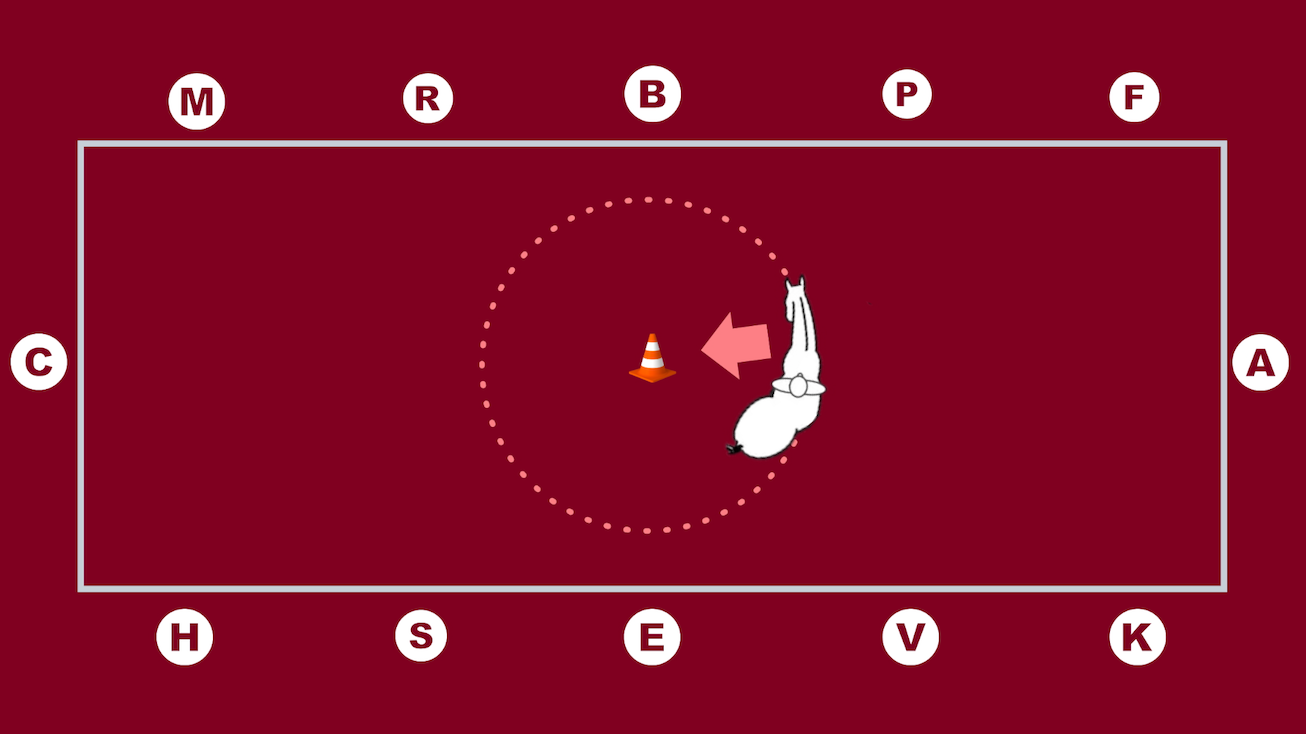
Move both hands to the inside to yield the shoulders in whilst maintaining bend
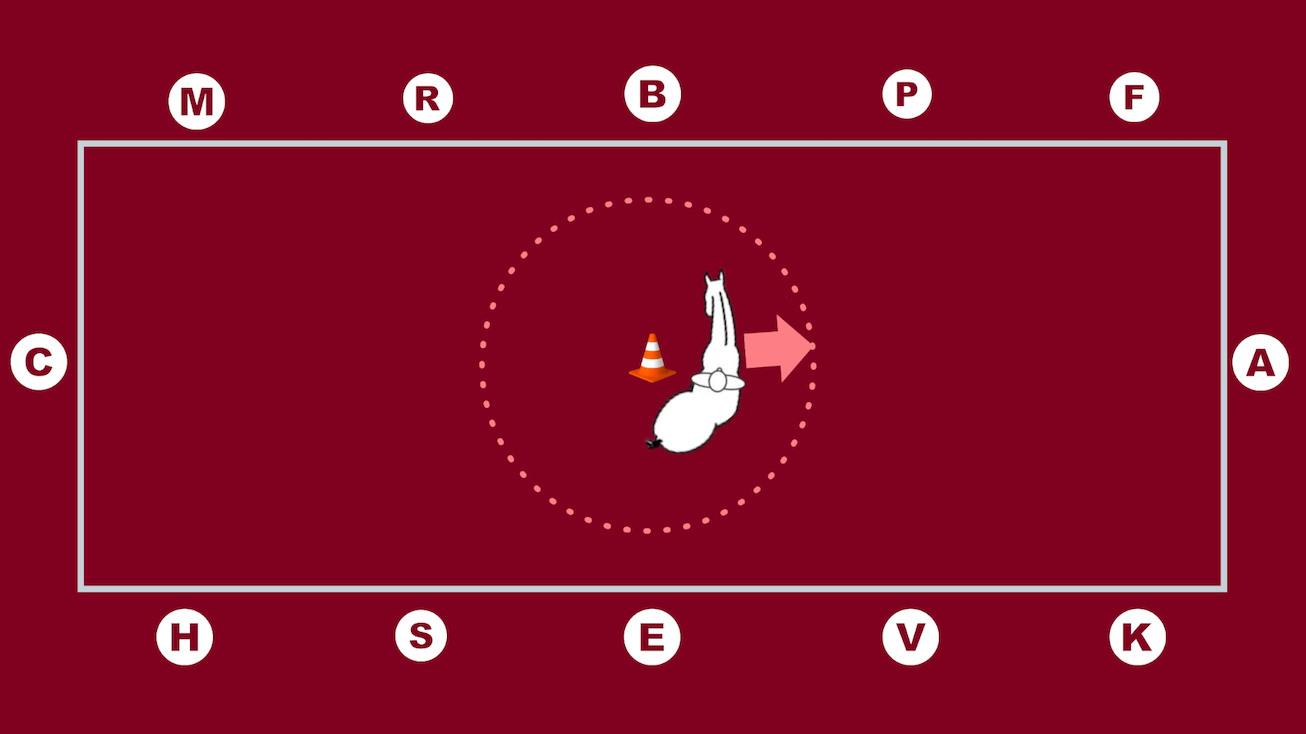
Move both hands to the outside to yield the shoulders out whilst maintaining bend
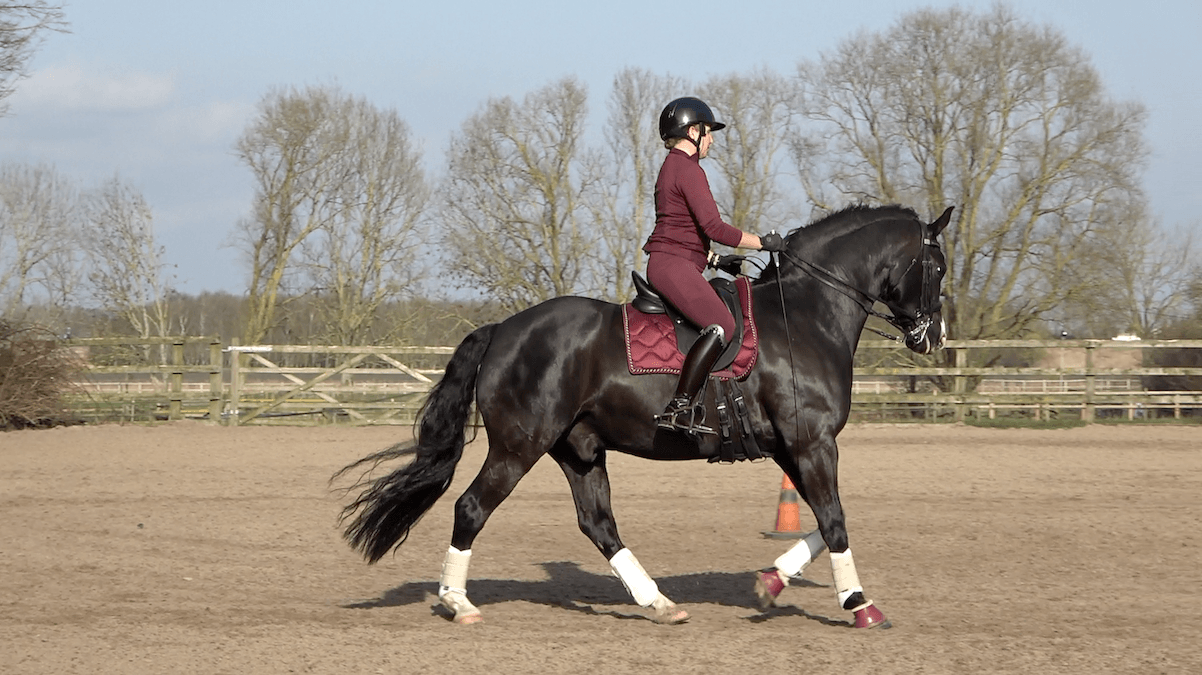
Progress to canter allow the travers positioning to create natural collection
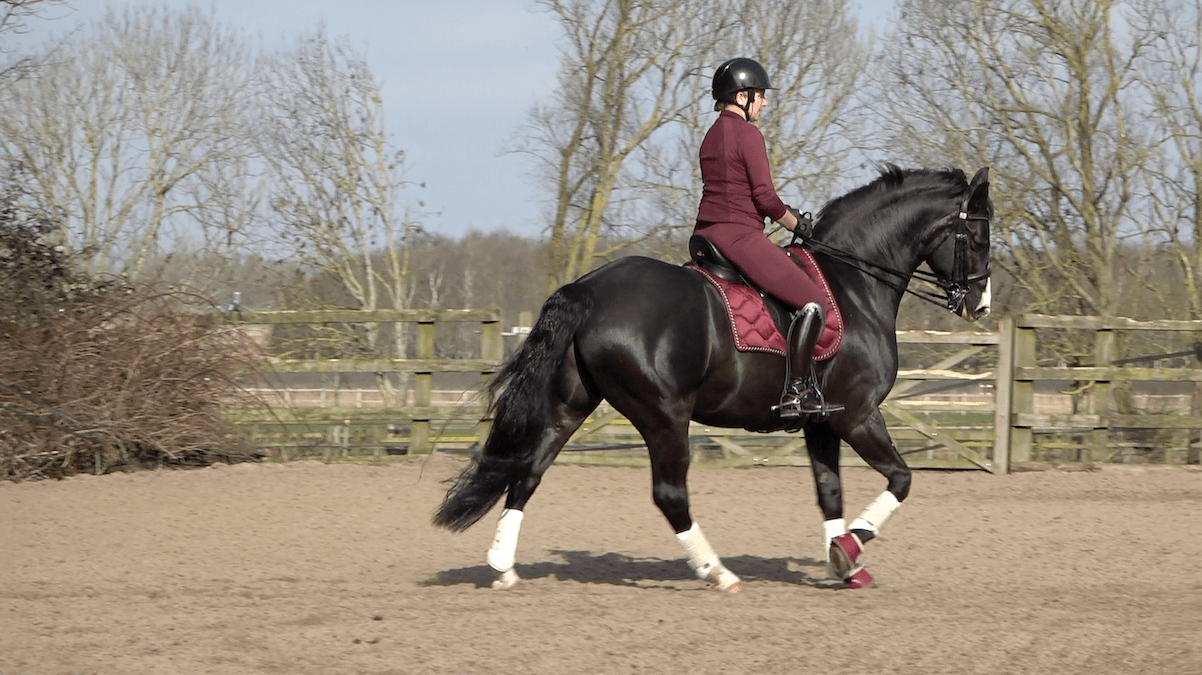
Change rein and repeat starting in walk travers
REMEMBER:
If your horse becomes tight or the angle too steep, make the circle bigger, then ride forward and straight on the circle with your inside leg on, and try again.
If your horse becomes tight or the angle too steep, make the circle bigger, then ride forward and straight on the circle with your inside leg on, and try again.
- Winter